Start a puppy’s crate introduction while you are at home, with the door open and the puppy free to investigate. Make the space comfortable, reward voluntary interest and avoid pushing or placing the puppy inside. These first sessions are about becoming comfortable with the crate. Closing the door and practising absences are later steps, not a test to add immediately when the puppy first enters.
Creating a Welcoming Crate Environment
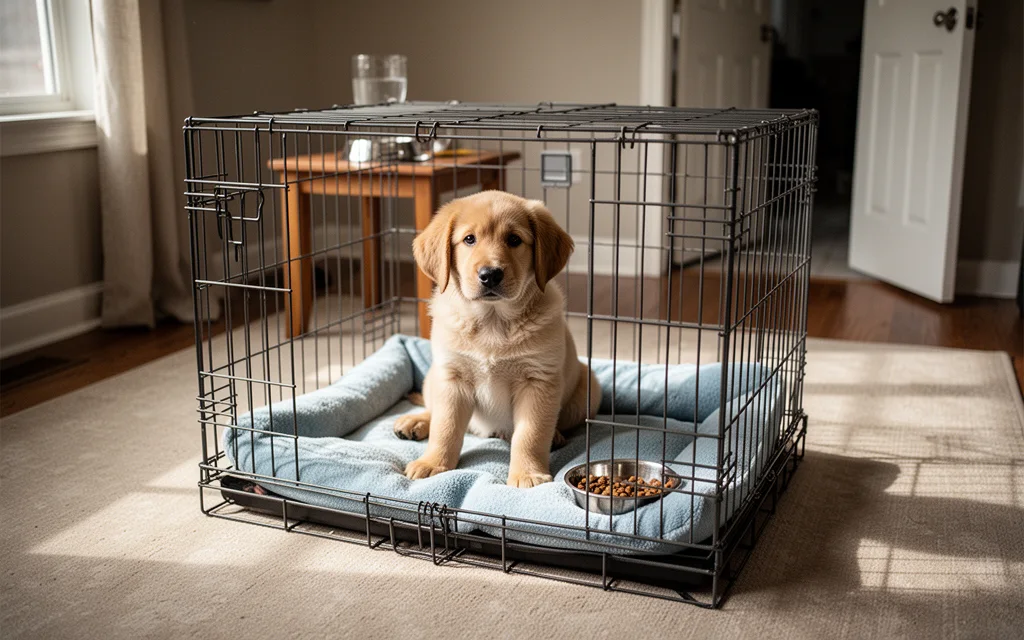
Positioning the crate in a quiet, draught-free area of your home helps your puppy associate it with calmness. Avoid placing it near high-traffic zones or appliances that produce noise, as this may create stress. Instead, choose a spot where your puppy can observe family activity without feeling overwhelmed, such as near a sofa or in a corner of a living room. Ensure the crate is at floor level, not elevated, to make entry and exit effortless for your puppy. According to PDSA, a draught-free location paired with soft bedding is essential for comfort.
- Layer bedding for warmth and familiarity: Use thick, washable blankets or a mattress that covers most of the crate floor, leaving space for food and water bowls. If using a cover, follow the crate guidance and maintain ventilation; keep the entrance open during these introductory sessions. This approach is recommended by PDSA to enhance the crate’s appeal.
- Introduce the crate gradually: Place treats, toys, or your puppy’s favourite blanket inside the crate with the door open. Allow your puppy to explore it freely at their own pace, avoiding any pressure to enter. This method, outlined in PDSA’s guide, helps your puppy view the crate as a positive, voluntary space rather than a confined area.
- Reinforce positive associations: Sit near the crate while offering praise or small treats when your puppy investigates it. Keep these introductory sessions voluntary and never use the crate as punishment. The Loyal & Loved guide emphasizes that the crate should always be a source of comfort, not pressure, to encourage voluntary use.
Give the puppy a choice in the first session
With the crate prepared and its door secured open, let your puppy approach in their own time. You can place a suitable treat or toy inside to invite investigation, following the gradual introduction described in PDSA’s crate-training guidance. Stay nearby and reward relaxed interest. Do not turn the invitation into a situation where the puppy enters for food and is immediately shut in.
If your puppy chooses to leave, allow them to do so. If they are reluctant to approach, make the task easier and try again later. Keep the practice brief and comfortable rather than measuring success by how long they stay inside. The next stage should depend on your puppy’s response, not on completing a fixed number of sessions.
Record comfort before adding a harder step
As an optional household note, you could record whether your puppy approached the doorway, stepped inside, or chose to rest. Add what you did and where you stopped. For example: “Door stayed open; puppy took a treat at the entrance and walked away; ended there.” That describes a useful starting point without calling it a failure.
A second example might be: “Puppy went inside, turned around and came back to me; I remained beside the crate.” Neither entry requires you to close the door next time. Share the note with anyone else helping so that they understand which part of the introduction your puppy has actually practised.
When you are ready to work on door closure, follow the gradual stages in Dogs Trust’s crate guide. If your puppy becomes distressed, stop and reassess rather than extending the session. If you are unsure how to proceed, ask for qualified advice about a suitable resting arrangement for your puppy.