A dog that walks beside you on a familiar street may pull as soon as you reach a new place. The practical response is not to demand a perfect walk immediately. Make the route easier, notice when the lead first tightens and reward the moments you want repeated. Dogs Trust’s pulling-on-lead advice explains that dogs pull for several reasons, including what is happening around them, and that moving forward faster can reinforce pulling. You can use that observation to plan a calmer walk without guessing exactly what your dog feels.
Make the first walk in a new place easier
Before leaving, choose a route with room to step aside and an easy way home. If you can, visit at a quieter time rather than choosing the busiest entrance. Bring small rewards your dog enjoys and your usual walking equipment. Dogs Trust specifically recommends planning the route, taking treats and avoiding places that make a walk more stressful. You need not complete the longest loop simply because you travelled there.
Start somewhere your dog can still look around and respond to you. A busy path can wait. If the first few minutes are already hard, shorten the outing; Dogs Trust notes that a short walk is fine when the experience has become challenging. The goal of this visit can be as modest as arriving, walking a short stretch with some slack in the lead, and leaving before both of you are struggling.
Notice the moment before pulling takes over
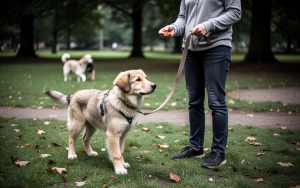
Watch the lead and the surroundings together. Does it tighten when you approach a particular corner, another dog, or a patch of interesting smells? That observation gives you a useful next action: create more distance before your dog is too focused on moving forwards. Dogs Trust advises moving away from something a dog is likely to pull towards while the dog can still respond, and keeping enough distance from distractions to practise.
For example, if the lead begins to tighten as you approach a crowded gate, move to a quieter edge of the space rather than repeating the same crossing. Give your dog a chance to look and sniff at a comfortable distance. When they turn back or walk near you with a loose lead, reward that choice and continue only if the route remains manageable. This is a short practice opportunity, not a test the dog must pass before going home.
Reward the walking you want
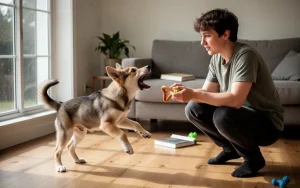
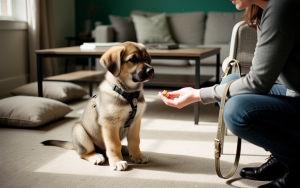
On an easier stretch, pay attention to the small moments when the lead hangs loose. Offer a reward close to you while you keep moving, then take a few more steps. Dogs Trust recommends rewarding good walking and says a treat your dog genuinely values may be more motivating than an ordinary biscuit. Choose food that is suitable for your own dog rather than copying an example without considering their needs.
If the lead becomes tight, avoid dragging the dog back or turning the outing into a contest. Stop making progress towards the interesting thing, create distance if needed, and try again from an easier spot. Keep your voice and movements calm. The point is to make loose-lead moments worthwhile while preventing a repeated pattern in which pulling is the quickest route to whatever lies ahead.
Adjust the plan to this particular place
A useful practice route has space to change direction without trapping you beside traffic or other people. Choose one stretch where your dog can stay engaged, and repeat that stretch before adding a busier section on another day. Keep the walk short enough that you can end after a manageable experience rather than pressing on until the lead is tight throughout. Dogs Trust suggests shorter walks, play, enrichment and training as practical options when conventional walks are difficult.
Write down one concrete observation after each visit: the place where pulling began, the distance at which your dog could still turn towards you, or the quiet stretch that went well. Next time, start with what worked and change only one thing. This is a way to compare your own dog’s walks; it is not a timetable or a claim that every dog improves at the same rate.
When you need more support
If the walk becomes difficult for you to manage, you do not have to solve it by staying in the hardest setting. Ask people approaching with dogs to give you more space and take a quieter route. Dogs Trust suggests speaking up about needing distance and seeking help from its behaviour-support team when walking has become challenging. A friend or family member can also accompany you if that helps you plan and observe the route.
Keep the next goal narrow: one quieter place, a short walk and several chances to reward slack in the lead. If your dog appears distressed, repeatedly cannot respond, or you feel unable to manage the situation safely, end the session and ask a qualified, reward-based professional for individual guidance. Do not force close encounters or rely on a technique that assumes every dog reacts the same way. Progress here means making walks workable for the dog in front of you, not achieving a flawless heel in a new place.
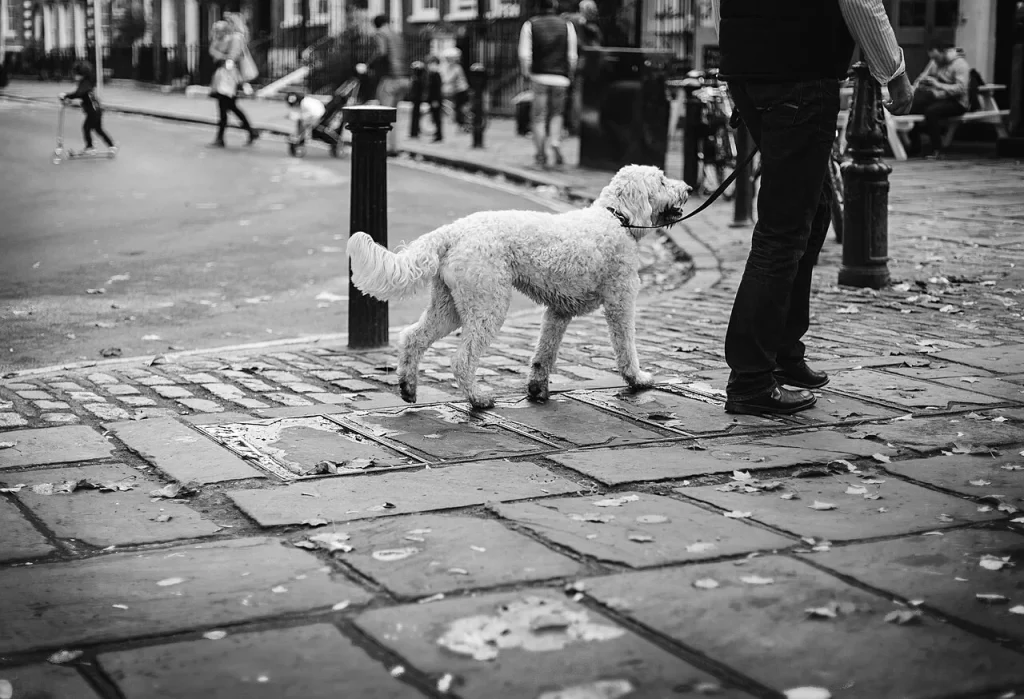
Featured photo: Clem Onojeghuo / Wikimedia Commons, CC0 1.0. Unmodified source photograph.
Disclosure: As an Amazon Associate I earn from qualifying purchases. Links in the related-products section are paid links.
Related products
This article may be complemented by dog lead with built-in treat pouch for training walks.