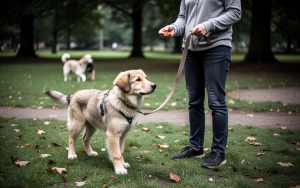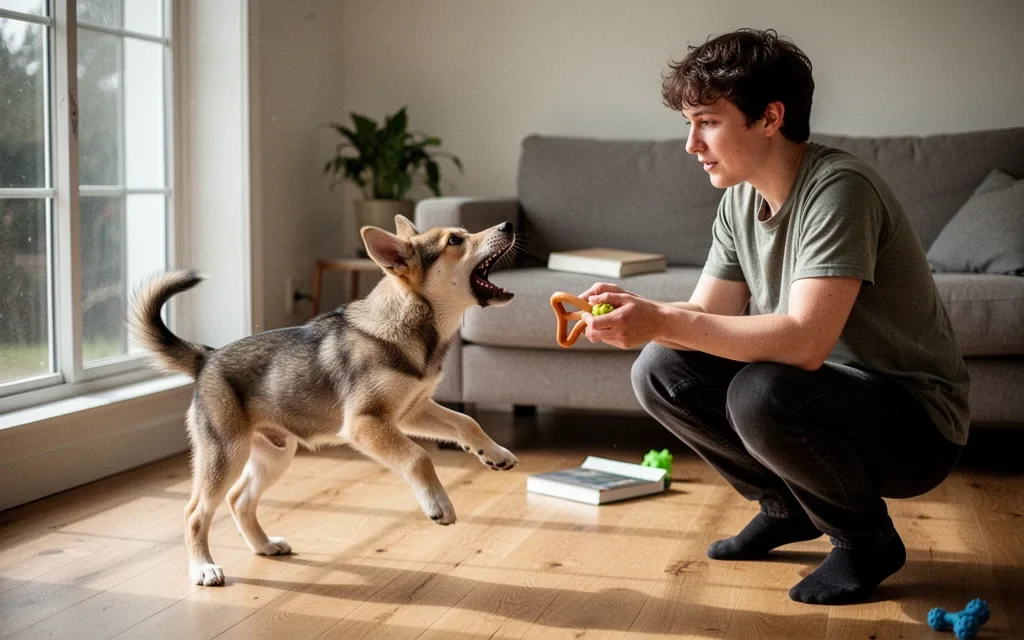
A dog barking at you may want interaction, but barking alone does not tell you why. Before changing your response, check what is happening: do they need to go outside, seem worried by a sound, or lack a chance to play and rest? Battersea’s barking guide recommends finding the cause before deciding whether to manage a situation or teach another response. This article is about a familiar attention request while you are present, not about every bark your dog makes.
Check the situation before training
Think about what happens just before the barking. You might be on a call, preparing a meal or sitting down after a walk. The dog may have learned that barking in this moment brings a look, a word or a game. That pattern is different from barking at a visitor, a noise outside or a dog who seems frightened. Battersea notes that dogs bark for different reasons at different times. Do not treat all of these situations as attention seeking.
Ask what the dog has already had today: appropriate activity, opportunities to sniff or play, social contact, water and a comfortable place to rest. Purina’s attention-seeking guidance advises checking whether the dog is getting enough physical and mental activity and interaction before trying to reduce a behaviour. This is not an instruction to tire the dog out. Choose manageable activities they enjoy and allow time to settle afterwards. If barking is new, persistent, accompanied by signs of distress, or you cannot tell what the dog needs, seek advice from your vet or a qualified behaviour professional rather than withholding attention.
Respond to a familiar attention request
Once you have checked that your dog is safe and needs are met, watch for a repeatable pattern: they bark directly at you and immediately seek a reaction, for example just as you pick up the television remote. In this narrow situation, avoid shouting or turning the bark into a game. Battersea explains that even telling a dog to be quiet can supply the attention they were seeking. A brief pause in eye contact may be appropriate for this confirmed attention request; it is not a rule to ignore a dog who might be worried, unwell or asking for help.
As soon as there is a quiet moment, calmly offer the interaction your dog can enjoy: a short game, gentle attention or a suitable reward. Do not wait for a long, perfect silence. Battersea suggests rewarding quiet behaviour and giving attention when a dog settles. If the barking continues, step back and reconsider the cause rather than extending the pause indefinitely. A dog left alone and barking cannot be assessed from the same pattern: Purina warns that behaviour labelled attention seeking may instead be related to being left alone. Observe and seek individual advice for that situation rather than applying this exercise at a distance.
Make quieter requests worthwhile
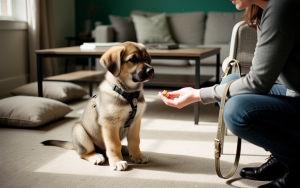
Notice moments when your dog is already calm near you. Offer a little attention then, before barking begins: a conversation, a brief play break or a reward for settling on a mat if that is something the dog already knows. Purina advises paying attention to behaviours you want to see instead of interacting only when the dog does something you dislike. This gives your dog more opportunities to receive social contact without needing to escalate a request.
If your dog enjoys a cue they have already learned, such as touching your hand, you can invite that response while they are quiet and reward it. The cue is a way to start a simple interaction, not a claim that sitting or touching prevents a dog from barking. Practise the cue at an easy time first. If the dog is already upset or cannot respond, do not repeat the cue over and over; deal with the situation that is making things difficult.
Plan a workable day, not a fixed formula
Look for predictable points when your dog asks for you: perhaps after you return home or while you work. Arrange a short, appropriate activity before a difficult period if it suits their routine. Battersea mentions walks, play, scent games, training and puzzle feeders as possible ways to offer stimulation when boredom or frustration is relevant. Pick one that fits your dog; more vigorous activity is not automatically better, and there is no universal number of sessions that guarantees quiet.
Keep a simple note for a few days: when barking happened, what was going on, whether you had checked basic needs, and what helped the dog settle. Compare situations rather than diagnosing the dog from one incident. If the pattern does not improve, or the dog looks worried, contact your vet or a qualified reward-based behaviour professional. Battersea recommends professional help when its general suggestions are not working. Your aim is a dog whose needs are met and who can ask for interaction in a manageable way, not silence at all costs.
Disclosure: As an Amazon Associate I earn from qualifying purchases. Links in the related-products section are paid links.
Related products
This article may be complemented by dog puzzle toys for mental stimulation.