If your puppy used to settle in the crate and now avoids it, pause and reassess rather than forcing them inside. “Crate training regression” describes the change; it does not explain its cause. Speak to your vet about a new change in behaviour while reviewing the setup and what happens around crate time. Do not wait for several days of unsuccessful training before raising a health concern.
Describe what changed before choosing a response
Dogs Trust’s body-language guidance recommends a veterinary check when normal behaviour changes or new behaviours develop. Reluctance alone cannot tell you whether your puppy is uncomfortable, worried or responding to something in the environment. Avoid labelling the change as stubbornness or assuming it is a normal phase at a particular age.
For the conversation with your vet or trainer, you could make a short record of what your puppy previously did and what they do now. This is an optional planning example:
- Before: “Walked into the open crate and rested while I sat nearby.”
- Now: “Stops at the entrance, then walks back to the bed.”
- Context: “We moved the crate yesterday; the door was open during both observations.”
The move is useful context, not proof of a cause. Include changes in eating, movement or other behaviour when speaking to your vet. Keep observations separate from interpretations so you do not overlook a health issue simply because a household change happened at the same time.
Evaluating the Crate Environment and Routine
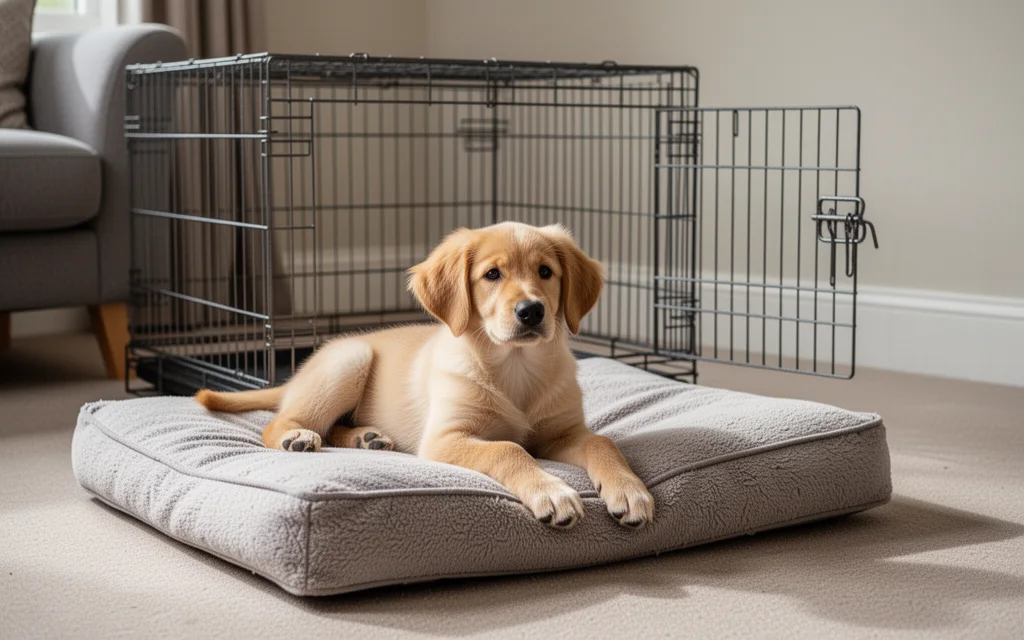
Begin by assessing the crate’s placement and physical setup. Ensure it is in a quiet, low-traffic area of the home, away from loud appliances or frequent foot traffic, as sudden noises or disturbances may cause anxiety. Dogs Trust’s crate guide recommends a calm, quiet position where the dog can rest undisturbed. Check that the crate is not overly cramped—puppies need enough room to stretch, sit, and lie down comfortably. PDSA advises choosing a crate for the puppy’s adult size or increasing its size as they grow.
- Review the crate’s interior: Is it lined with a familiar, washable mat or blanket? Note any recent change without assuming it explains the reluctance.
- Examine accessibility: Can the puppy enter and exit the crate freely without obstruction? Check that the equipment is correctly assembled and that the entrance is clear.
- Review what crate time currently involves: Is the puppy being asked to stay longer or cope with a closed door or absence they have not comfortably practised? Describe those differences when seeking guidance.
- Pause difficult sessions: Do not keep putting the puppy back inside to test whether they will tolerate it this time.
Discuss a suitable resting arrangement with your vet or qualified behaviour professional while the difficulty is assessed.
Make the next practice easier, not longer
When it is appropriate to resume practice, return to a stage your puppy can manage comfortably. PDSA’s crate-training guidance starts with a gradual, positive introduction and says never to use the crate as punishment. Secure the door open, allow voluntary investigation and reward comfortable interest. Do not lure the puppy inside and immediately shut the door as a test.
Keep door-open practice separate from closing the door or leaving the room. A puppy choosing to step inside has completed that small interaction; it does not establish readiness for a longer absence. If they leave, let them. If they become distressed, stop and seek advice about how to proceed.
As an optional household agreement, decide who will supervise the next practice and what would make you stop. For example: “We will offer an open crate while an adult stays nearby; we will stop if the puppy avoids the interaction.” Share the same plan with everyone helping, so one person does not increase the difficulty without knowing what the puppy has managed.
For night-time crying, PDSA advises checking toilet needs and offering reassurance rather than leaving a puppy to cry it out. Silence alone is not evidence of comfort. If the problem continues or you cannot arrange comfortable rest safely, get individual veterinary and qualified behaviour support rather than extending confinement.