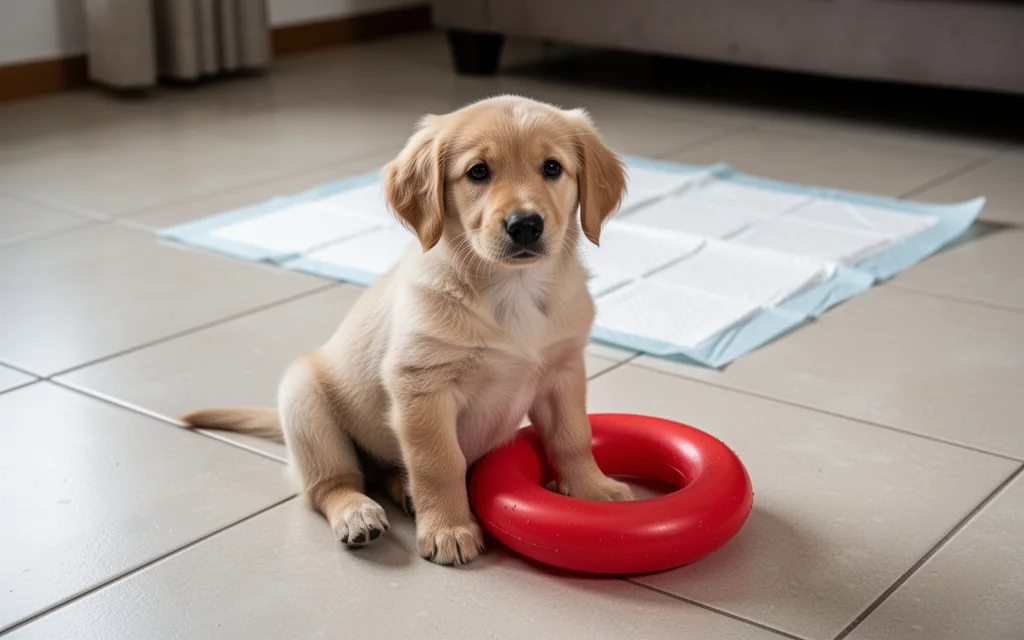
If your puppy shreds a toilet pad, prevent further access to the damaged material while keeping a suitable toilet option available. Supervise pad use and redirect chewing towards an appropriate toy. If you think any pad material has been swallowed, contact your vet immediately; do not wait for repeated incidents or visible symptoms before asking for advice.
Deal with suspected swallowing first
PDSA’s guidance on swallowed objects and gut blockages advises immediate veterinary contact when a dog swallows something they should not. A training plan is not a substitute for that advice. Explain what material may be missing and what you observed, without assuming that a puppy who appears well has passed it safely.
Shredding and swallowing are different observations. If you only found a damaged pad, say that when calling rather than guessing how much was eaten. Follow the vet’s instructions for your puppy. Once the immediate concern is addressed, look at how to prevent another unsupervised opportunity.
Creating a Safe and Supervised Environment
Establishing a safe and supervised environment is essential to prevent your puppy from treating pee pads as chew toys. This involves both physical setup and consistent training to redirect their behavior. Offer appropriate chew alternatives during supervised time. These toys should be durable, non-toxic, and designed for puppies to satisfy their natural urge to chew. When your puppy shows interest in a pee pad, calmly interrupt the behavior and offer an alternative toy. Praise them when they engage with the toy instead of the pad, reinforcing the desired action.
- Supervise and redirect your puppy during potty times. If they begin to chew on the pad, gently guide them toward a suitable chew toy and reward them for choosing it. This teaches them that chewing on the pad is not acceptable, while chewing on their toy is encouraged.
- Keep the toilet area accessible for its intended purpose. An elevated tray that the puppy cannot reach is not a workable toilet solution. If a pad holder is used, follow its instructions and continue supervising; a holder is not a guarantee against chewing.
- If you cannot safely leave a pad available, arrange another suitable toilet opportunity or supervision. Do not replace toilet access with prolonged confinement. Ask for individual help if your home layout makes this difficult.
- Keep chewing and potty opportunities separate. Offer toys as chewing activities and supervise the pad as a toilet area.
By combining supervision, redirection, and a well-organized environment, you can help your puppy learn the difference between appropriate and inappropriate chewing behaviors. If your puppy continues to chew on the pad despite these efforts, consult your veterinarian for further guidance, as this may indicate a need for additional training or a medical evaluation.
Choose a toilet setup that works in your home
Battersea’s toilet-training guidance treats pads as a possible short-term aid, including for flats, while keeping outdoor opportunities important where available. It recommends a consistent pad location away from eating and sleeping areas. A reusable pad is an option, but it should look and feel different from rugs or bedding. Changing material does not itself prove that a puppy will stop chewing.
- If you have suitable outdoor access: Plan who can take the puppy out when needed. Do not rely on removing the pad without arranging those opportunities.
- If you currently need an indoor option: Consider whether an adult can supervise its use and discuss a suitable alternative if that cannot be managed.
- If you are considering new equipment: Check how it is fitted, cleaned and supervised. Marketing words such as chew-resistant are not a guarantee of safety for your puppy.
For chewing activities, use PDSA’s advice on selecting suitable chews and toys. Reward the alternative your puppy chooses, avoid punishment and seek qualified support if the problem continues. The aim is both a usable toilet arrangement and fewer chances to chew loose material.