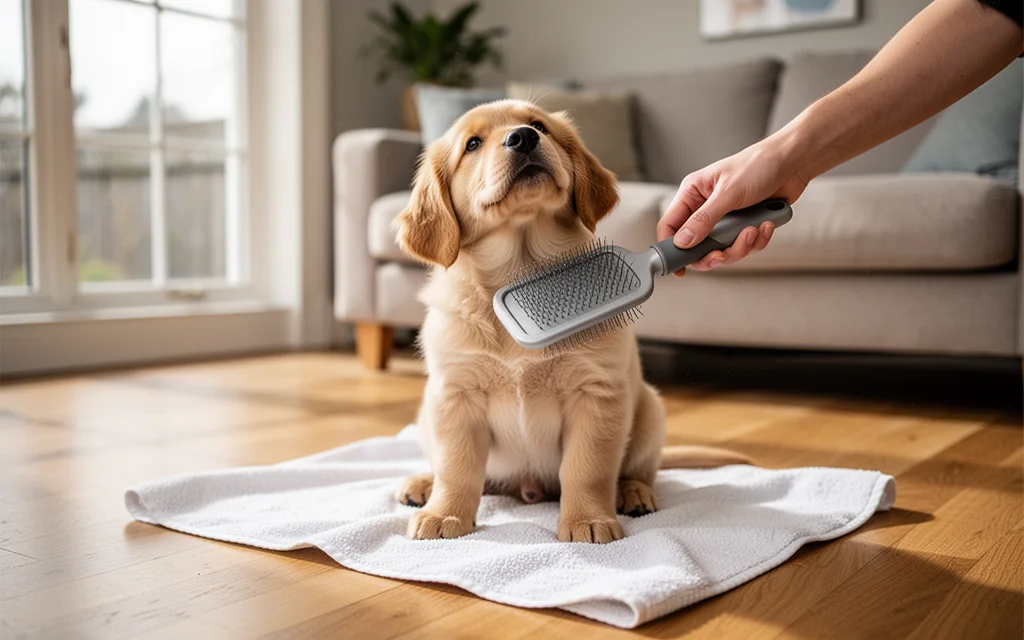
Helping a puppy feel comfortable with brushing at home starts with gentle introductions and short, positive handling sessions. Use light touches and reward calm behaviour with treats or praise. If your puppy shows discomfort, stop and make the next introduction easier. The immediate aim is comfortable participation, not finishing a full grooming session at any cost.
Separate brush practice from essential coat care
Getting used to a brush and completing a full groom are different tasks. A practice session can focus on a small, comfortable interaction. If your puppy needs coat care that you cannot manage comfortably, ask a suitable groomer or your vet for help rather than forcing the session to continue.
PDSA’s grooming advice is a useful starting point for general care. Your puppy’s coat and current condition matter when choosing equipment; an introductory exercise is not a universal brushing schedule for every breed.
Getting Started: First Brush Introductions
Begin by creating a calm, distraction-free environment where your puppy feels secure. Choose a brush appropriate to your puppy’s coat, with professional advice if you are unsure. According to Purina, starting slowly when your puppy is sleepy allows them to focus on the sensation of the brush rather than external stimuli. Begin by touching the brush to your puppy’s fur in short, gentle strokes, pairing each movement with a treat or verbal praise. The aim is a positive association between the brush and rewards. If your puppy shows signs of tension, pause immediately and redirect their attention with a toy or food item. Resume only when they appear relaxed again.
- Use high-value treats: Offer small, tasty rewards during each interaction to reinforce calm behavior. Purina suggests using a lickimat with food smeared on it to keep your puppy engaged and distracted during the process.
- Pause when needed: If your puppy growls, freezes, or turns away, stop immediately. Resume only after they show relaxation, ensuring the experience remains voluntary and positive.
Regular, consistent handling strengthens trust and makes future grooming easier. Always end sessions with praise, even if progress seems minimal, to reinforce positive feelings about the experience.
Decide what to repeat next time
Dogs Trust’s handling guidance says to stop if your dog becomes uncomfortable. It recommends veterinary advice for an established fear of handling or signs of aggression, since pain may be involved. You do not need to determine the cause yourself before asking for help.
For your own notes, you could record three things: what you offered, what your puppy did, and where you stopped. This is an optional household example, not a scoring system. “Looked at the brush, stayed beside me, stopped after a gentle touch” gives you a clear account. “Failed grooming” does not tell you what was difficult.
You might use separate lines for seeing the brush, having it near the coat, and accepting a light stroke. Leave any step you did not try blank. There is no need to tick every line in one session. The note is there to help you describe the experience and ask a precise question if you need advice.
If two people help with grooming, share those observations. One person can explain which brush was used and where the puppy seemed comfortable, rather than the next person starting with a completely different task. If touching a particular area appears uncomfortable, describe that to your vet; do not repeatedly test it to fill in the record.
[…] Helping a Puppy Feel Comfortable with Brushing at Home […]