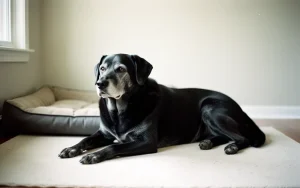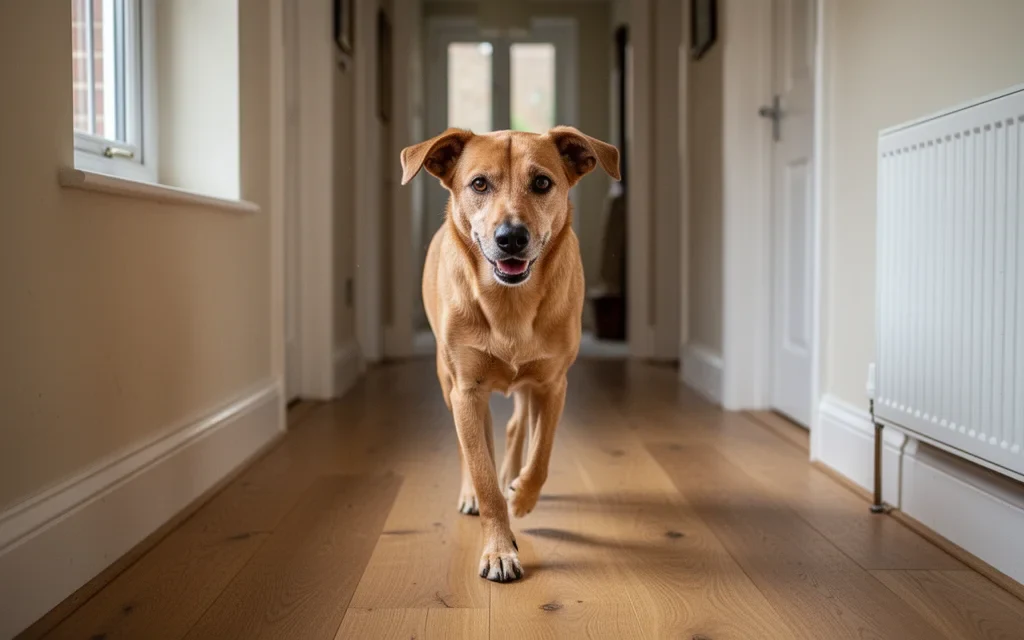
To start a simple scent game with your dog, put a small piece of their usual food on a clear patch of floor, say “find it”, and let them go to it. Begin with food they can see. Once they understand the game, try an easy hiding place nearby. The aim is a relaxed search, not a puzzle they have to struggle through.
You do not need a scent kit or a room full of equipment. This guide keeps the first game small, then shows you how to choose a sensible next step. It is for a dog playing with you at home, rather than training to find a particular competition scent.
Choose a safe place to start
Pick a quiet spot where you can watch your dog and reach any food that goes astray. Clear away things they might knock over or pick up. Keep the search on an accessible surface: pushing food under a heavy sofa or behind an appliance makes it harder for you to help.
Use food that already suits your dog’s diet, and include it in their normal daily allowance. If their diet is restricted, ask your vet what is suitable before trying different treats. Start with one dog at a time so you can pay attention to that dog’s response.
Dogs Trust’s enrichment guidance stresses choosing activities around the individual dog’s health, abilities and preferences. It also recommends watching for confusion or frustration and making an activity easier when needed.
Teach the first “find it” game
The ASPCA’s beginner exercise starts with a treat close to the dog, a simple cue and praise when they find it. Hiding food comes later, once the dog knows what the game means.
- Let your dog notice the food. Place a piece nearby on the clear floor. There is no need to hide it at this stage.
- Give your cue. Say “find it” in your normal, friendly voice. Let your dog move towards the food without pulling or steering them.
- Let them collect it. Offer calm praise when they find it. Finding and eating the food is part of the reward.
- Watch before repeating. If your dog seems interested, offer another easy find. If they walk away, leave the game there rather than following them with more instructions.
Your dog does not have to perform a sit or a stay to take part. If you need a pause while you set up, ask another adult to keep them company, or place the next piece while they watch. This is a search game, not a test of how long they can wait.
Make one small change at a time
When visible food is easy to find, think about a slightly less obvious position in the same clear area. Keep it reachable. You might put a piece beside the leg of a sturdy chair rather than directly in front of your dog. Avoid positions that invite climbing, squeezing into gaps or chewing furniture.
Change either the position or the size of the search area, rather than making both harder at once. There is no need to keep increasing the challenge every time you play. An easy game your dog enjoys is still a useful way to spend time together.
For example, imagine your dog happily finds food on the kitchen floor but looks puzzled when you move to the hallway. You could return to the kitchen for the next game. Another option is to show them the first piece in the hallway before asking them to search there. This is a household planning example, not a training timetable.
What if your dog gets stuck?
Think of a missed find as information about your setup. It does not mean your dog is being stubborn. Check whether the food is easy to reach, whether something else has caught their attention, and whether they still want to play.
- They look at you instead of searching: make the next piece visible and close by, as it was at the start.
- They search in the wrong place: bring the game back to a smaller, clearer area.
- They start pawing or chewing at an object: stop using that hiding place. Choose a find that does not involve moving or damaging anything.
- They lose interest: finish and offer a chance to rest. You can choose a different activity another time.
Do not keep repeating the cue while your dog is confused. Help by changing the task. If there is a sudden change in their willingness to eat, move or take part in familiar activities, contact your vet rather than treating it as a training problem.
Keep a tiny note of what worked
A short note can make the next game easier to plan. You do not need to record a score or time your dog. Try writing down the room, where you placed the food, and whether the dog found it comfortably.
An example might read: “Kitchen, food visible beside the chair, found it and came back for another go.” Another might be: “Hallway, too much going on, return to the kitchen next time.” These notes describe your own dog’s experience without comparing them with another dog or an online video.
Food searches are different from recall games at home: here, your dog is finding food rather than practising coming back to you. Keep those aims clear. For the wider approach to rewards, see our first steps in reward-based training.
Finish by checking the area for any missed food and putting it away. Leave the setup simple enough that you can repeat it easily. Your next session can start with the same easy find; there is no prize for making the game difficult.