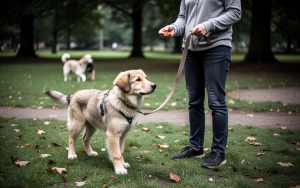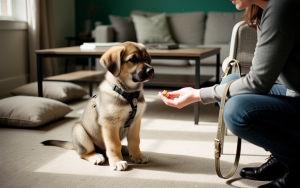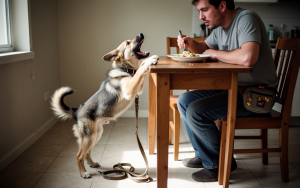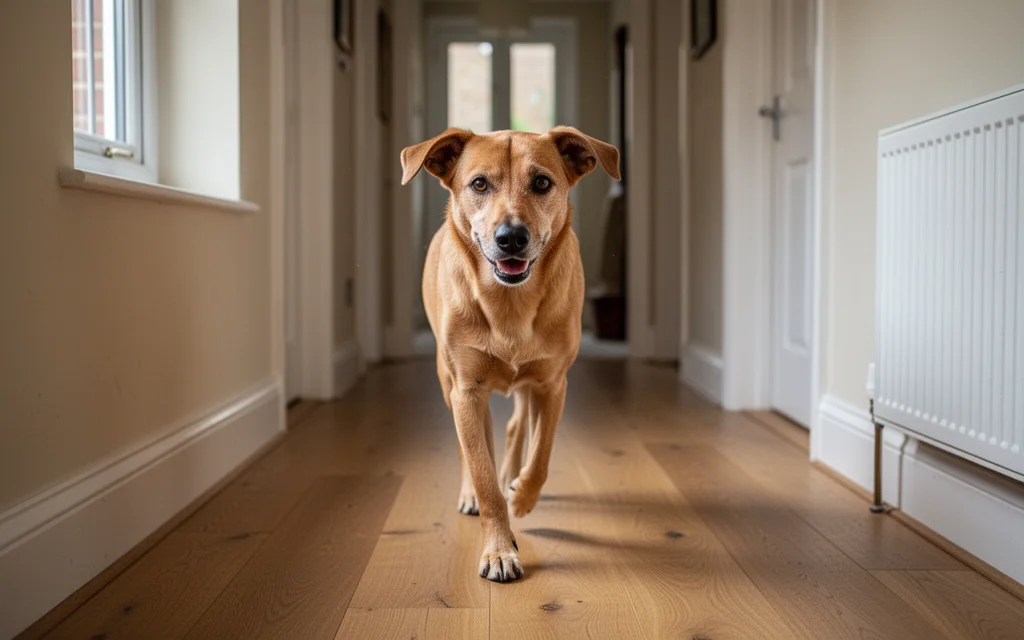
Recall games should reward your dog for returning to a person when called. Finding scattered food is a different activity. At home, start in a quiet, secure space with rewards your dog enjoys, and keep the exercise easy enough for them to succeed. Try one of the games below, then decide whether to repeat it or simplify it before adding distance.
Creating a Safe and Encouraging Training Space at Home
Begin by selecting a quiet, enclosed area within your home or garden where your dog feels secure and undisturbed. Clear a comfortable route and put unnecessary distractions aside. Choose a manageable route within the space you have rather than turning a home game into a distant outdoor test. According to Battersea Dogs & Cats Home, starting in a low-distraction environment helps your dog focus on learning without competing stimuli. Secure the area to prevent escapes, and consider using barriers or gates if necessary.
- Choose a space with minimal visual or auditory interruptions, such as a closed room or a fenced yard.
- Ensure the environment is free from hazards like open windows, loose cables, or sharp objects.
Use a reward that your dog wants in this setting, such as a suitable treat or a favourite toy. Have it ready before you call so you can reward the return. Different dogs value different rewards; a familiar food reward is not automatically unsuitable simply because it is ordinary kibble.
Game one: return between two people
The American Kennel Club describes relay recalls in which people take turns calling and rewarding the dog. Begin close together in a clear room or hallway. One person calls; the other waits rather than calling at the same time. Reward when the dog reaches the caller, then let the other person take a turn. Increase distance gradually only when the short version is going well.
Game two: find the person who called
The same AKC guide describes an easy hide-and-seek recall. Use a familiar wait cue if your dog knows it, or have another person help while you move to an obvious nearby place, such as partly around a corner. Call your dog and reward them for finding you. The person is the destination; do not substitute a pile of hidden treats elsewhere. Keep early hiding places easy.
Decide what the next repetition needs
As a practical example, suppose your dog turns towards the caller but stops at a toy halfway across the room. You could put the toy aside and reduce the distance for the next attempt. That is a more useful adjustment than calling repeatedly from farther away and hoping the response improves.
If two people are helping, agree who calls first and where the reward will be given. Both calling at once makes it unclear which return you are trying to practise. Keep your tone welcoming and avoid scolding the dog for reaching you slowly, following Battersea’s recall guidance.
A successful indoor game is a useful practice session, not proof of reliable recall around traffic, wildlife or other dogs. Treat those settings as separate training challenges. For this article’s exercises, finish with a manageable return at home rather than adding an unplanned outdoor test.
Disclosure: As an Amazon Associate I earn from qualifying purchases. Links in the related-products section are paid links.
Related products
This article may be complemented by dog training recall games with treats.
Browse related products on Amazon