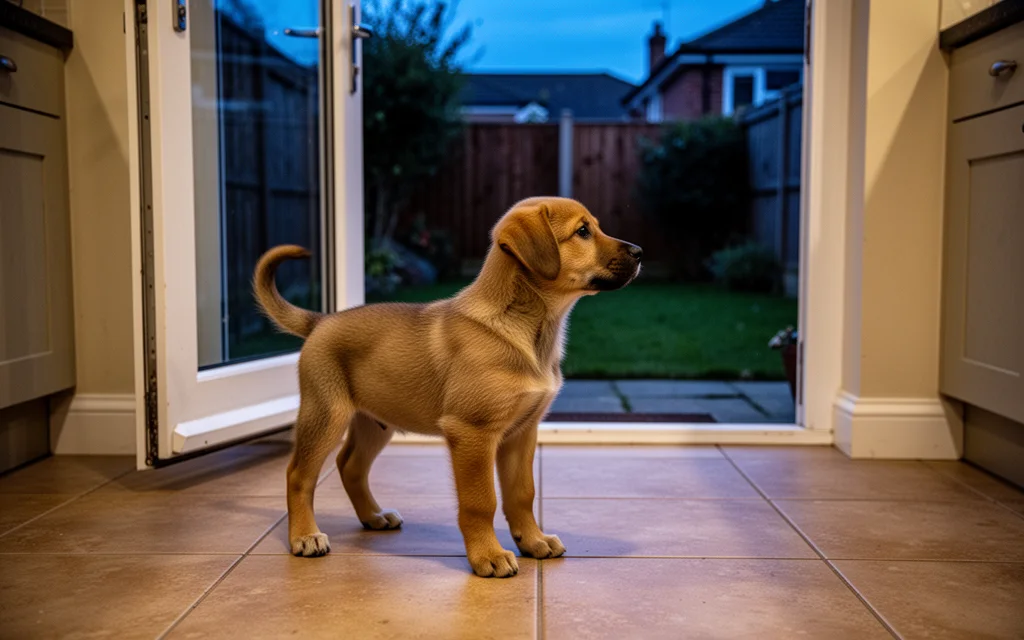
For overnight toilet trips, ensure your puppy has safe, low-key access to the outside area. Take them out regularly, especially if they show signs like sniffing or circling. Reward them immediately when they go to the toilet outside. If they don’t go, return them indoors calmly and try again later. Avoid punishing them, as this can cause anxiety. Be patient and consistent, as puppies may take time to learn. Keep a close eye on them and respond to their needs without creating a rigid schedule.
Examples of low-key trips include taking them out just before bedtime and again if they stir during the night. Use a calm tone and avoid distractions like play or fussing. If they go outside, praise them and offer a treat. If they don’t, quietly return them indoors and try again in a short while. This helps them associate going outside with positive experiences.
Prepare a simple route outside before bedtime
Before bedtime, prepare a simple and familiar route outside that your puppy can easily follow. This route should be free of obstacles and lead directly to a designated toileting spot. Make sure the path is well-lit if you’re going out at night, and avoid any areas where your puppy might become distracted by other sights or smells. Keeping the route consistent helps your puppy feel more secure and confident in their toileting routine.
Take your puppy out just before bedtime, and again if they stir during the night. Use a calm tone and avoid any play or fussing. If your puppy goes to the toilet outside, immediately reward them with a treat or praise. If they don’t go, quietly return them indoors and try again in a short while. This helps reinforce the idea that going outside is a positive experience and reduces the likelihood of accidents indoors.
It’s important to remain patient and consistent, as puppies may take time to learn. Avoid punishing them for accidents, as this can increase anxiety and make the situation worse. Instead, focus on creating a safe and predictable environment that encourages them to go outside. If you’re unsure about your puppy’s needs, consider reaching out to a professional for guidance, as outlined in this resource.
Respond when your puppy wakes or shows toilet signals
Respond promptly when your puppy wakes or shows signs of needing to toilet, such as sniffing or circling. Take them outside to a familiar, safe spot and use a calm tone to avoid overstimulating them. If they go to the toilet outside, reward them immediately with a treat or praise. If they don’t go, return them indoors quietly and try again later. This approach helps them associate going outside with positive outcomes and reduces confusion.
Keep the environment predictable by maintaining a consistent route to the toileting area. This helps your puppy feel more secure and understand where they should go. Avoid any distractions like play or loud noises during these trips, as they can divert your puppy’s focus from the task at hand. If your puppy seems unsure, stay close and offer gentle encouragement.
Patience is essential, as puppies may take time to fully understand the routine. Avoid showing frustration or anger, as this can cause anxiety and make them less likely to follow the desired behaviour. If you are unsure about how to proceed, seek guidance from a professional, as outlined in this resource. This can provide tailored advice to help you and your puppy succeed.
Keep the toilet trip calm and return to bed
Keep the toilet trip calm and return to bed by taking your puppy outside as soon as they show signs of needing to go, such as sniffing or circling. Use a calm tone and avoid any play or fussing. If your puppy goes to the toilet outside, reward them immediately with a treat or praise. If they don’t go, quietly return them indoors and try again in a short while. This helps them associate going outside with positive experiences and reduces the likelihood of accidents indoors.
Use a short household log to adjust the routine
When using the log, be sure to record not only the time of the trip but also whether your puppy went to the toilet outside. If they did, note the reward given, such as a treat or praise. If they didn’t, record the time they were returned indoors and when you tried again. This information can help you determine the best times to take your puppy out and avoid unnecessary trips.
It’s important to remain flexible and not become rigid with the schedule. Puppies can have variations in their toileting needs, and the log can help you adapt to these changes. For instance, if your puppy starts needing to go more frequently during the night, you can adjust the log to reflect this and plan additional trips as needed. This approach supports a calm and predictable environment for your puppy without enforcing a strict timetable.
Refer to this resource for further guidance on managing toileting issues and understanding your puppy’s needs. This can provide additional support and help you tailor your approach based on your puppy’s individual behaviour and progress.