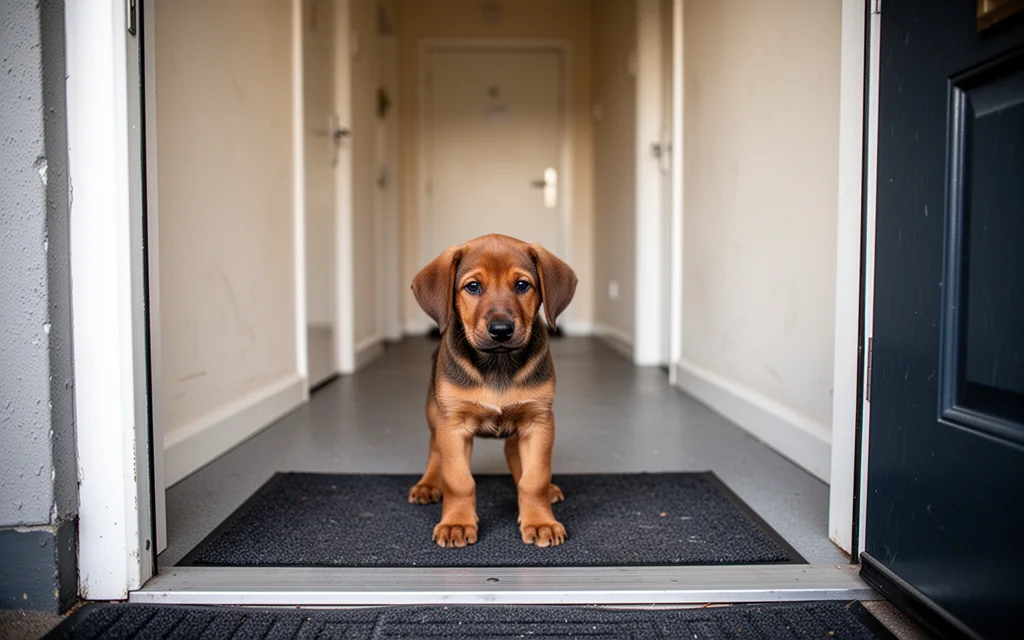
Puppy toilet training in an apartment without a garden requires planning for vertical movement, such as navigating stairs or using lifts to reach designated outdoor areas. Identify an appropriate outdoor toilet area you are allowed to use. Shared corridors and lobbies form part of the route outside; do not treat them as toilet areas. Tracking accidents and successful eliminations in an event log can reveal patterns, guiding adjustments to timing or location. Reward-based training remains essential, reinforcing positive behaviour regardless of space constraints. Readers must assess their building’s layout, available outdoor access points, and how to integrate tracking into daily life, ensuring adaptability to their specific apartment’s logistics and the puppy’s needs.
Designing Accessible Potty Break Routes
- Keep the path to the toilet area consistent to help your puppy form a routine. This includes using the same entrance, corridor, or door each time. Consistency reinforces learning and reduces confusion.
- Track your puppy’s movements and toilet breaks using a simple log or app. This can help you identify patterns and adjust the route or timing as needed. A log might include the time, location, and outcome of each attempt, which can be reviewed to refine your approach.
By carefully planning and maintaining these routes, you can support your puppy’s toilet training and reduce the likelihood of accidents. For further guidance on establishing a routine, you may refer to PDSA’s advice on daily routines.
An optional household log for toilet trips
As an optional household planning aid, recording toilet trips can help you look for patterns, such as times or locations where accidents are more likely, and adjust strategies accordingly. Use a notebook, spreadsheet, or app to note the date, time, location (e.g., near the front door or in the hallway), and whether the puppy successfully toileted or had an accident. Include additional context, such as recent meals, play sessions, or changes in routine, which may influence behaviour. Review the log daily to spot trends—consistent accidents after specific activities, for example, may signal the need to increase outdoor trips or plan toilet breaks around the routine.
- Consistency in logging ensures no detail is overlooked. Even minor observations, like a puppy sniffing near the toilet area, can reveal preferences or discomfort with certain surfaces or locations.
- Separate success and accident entries to measure progress over time. This distinction helps avoid confusion when reviewing the log later, especially if multiple events occur in a single day.
- Use a dedicated space for the log, such as a shared family calendar or a waterproof notebook kept near the puppy’s feeding area, to ensure it remains accessible and updated regularly.
For structured guidance on how to approach this process, refer to House Training Your Puppy | Dogs Trust, for the underlying toilet-training guidance. The log here is a household planning example, not a method prescribed by that source. This method supports adaptability, allowing adjustments based on the puppy’s unique pace and environmental challenges, such as navigating stairs or accessing outdoor areas in an apartment setting.
Adapting Training Methods to Apartment Constraints
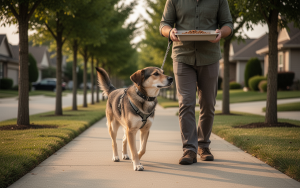
Apartment living requires adjusting traditional training techniques to account for limited space and the need for controlled movement. Use a lead during stair navigation or elevator trips to maintain focus, especially when guiding your puppy to a shared outdoor area or a building-specific toilet zone. Pair this with a consistent verbal cue, such as “hurry up” or “toilet,” to signal the purpose of each outing, as recommended by PDSA. For rewards, carry high-value treats in a small, accessible container to reinforce successful eliminations immediately, even in confined areas. Avoid punishing accidents indoors; instead, increase the frequency of guided trips, as advised for older dogs by PDSA, to build confidence in new environments.
- Use a lead during stair or elevator use to prevent distractions and ensure control.
- Assign a consistent verbal cue to associate with toileting, even in small spaces.
- Keep rewards portable and ready for immediate reinforcement after successful eliminations.
- Log outings and accidents to refine timing and identify triggers for adjustments.
Disclosure: As an Amazon Associate I earn from qualifying purchases. Links in the related-products section are paid links.
Related products
This article may be complemented by puppy potty training for apartment.