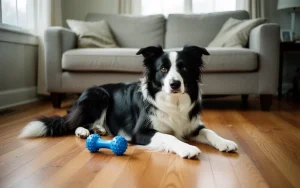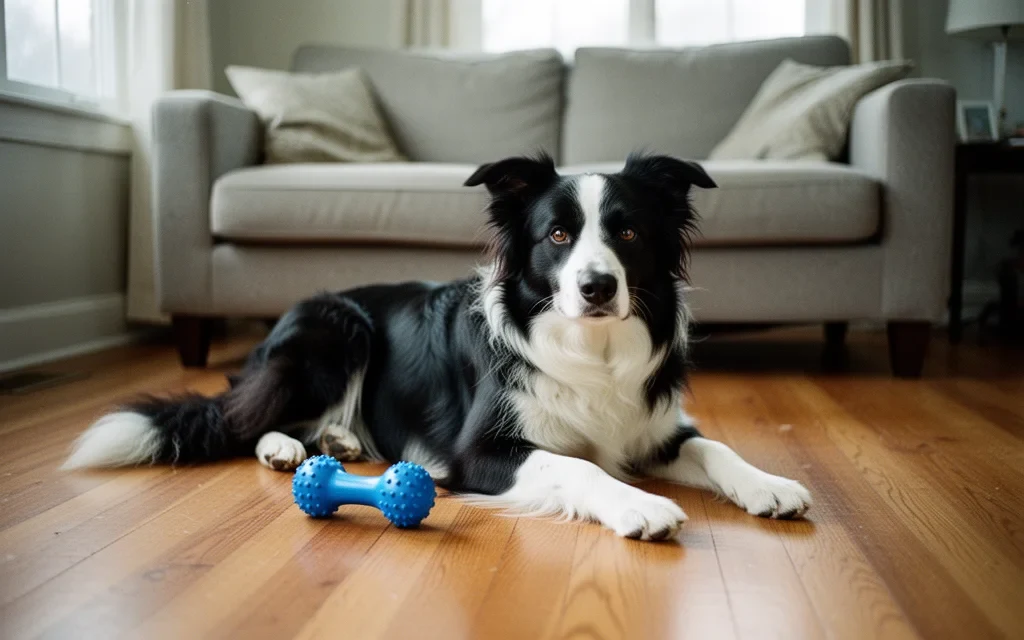
Start a dog puzzle feeder on its easiest setting, with the food easy to reach. Let your dog explore while you stay nearby. If they cannot get started, show them an open food space rather than letting frustration build.
A puzzle feeder is one way to offer a food search. It is not a test of intelligence, and a complicated model is not automatically more useful than a simple one.
Choose a puzzle your dog can use
Check that the size suits your dog and that moving parts are secure. Read the instructions for filling, cleaning and supervision. If parts are damaged or small enough for your dog to swallow, do not offer the puzzle.
Think about how your dog usually plays. A dog who tries to destroy objects may need a different type of activity. Any health, movement or diet restrictions should guide the choice too; ask your vet when you are unsure what is suitable.
Show the easy version first
Set up a small amount of your dog’s usual food with the covers or sliders in their easiest position, as the design allows. Put the feeder down in a quiet place and let your dog notice it. There is no need to hold their paw on a slider or force their nose towards an opening.
Watch one attempt before changing anything. If they find the food, leave that easy version available for another go. If they cannot reach it, open the space further or return to food placed plainly on top. Keep the puzzle stable so it does not slide away while they investigate.
Change one part, then watch again
Once the easy version makes sense, you might partly close one food space while leaving the others open. This is an example of a small change, not a required progression. Some dogs may prefer the simple version throughout.
If your dog walks away, paws hard at the feeder or starts chewing its edges, pause. Check whether you made it too difficult or whether they simply want something else to do. Do not keep adding extra treats to persuade them to tackle a frustrating puzzle.
Fit it around meals and rest
Use part of the normal food allowance, rather than adding a whole extra meal. Keep other pets separate during the activity, and do not leave a food puzzle with dogs who may compete over it. Ask for professional help if food guarding is a concern.
For your own planning, note which opening your dog used easily and which caused a problem. Next time, begin with the easy part. Check and clean the feeder afterwards. A short, comfortable activity followed by rest is a better aim than making your dog work through every compartment.
Further reading
Dogs Trust: Enrichment activities to keep your dog entertained | Dogs Trust; ASPCA: Canine DIY Enrichment | ASPCA.
Related advice: an easy find-it game.