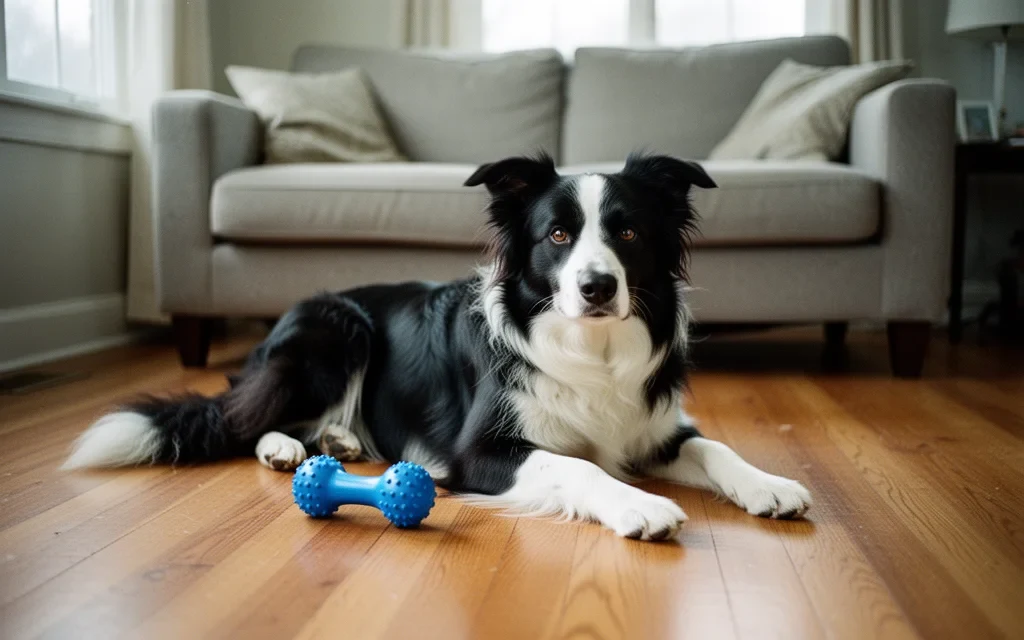
A dog toy rotation means keeping a selection available and changing some of it from time to time. Start with toys your dog already enjoys. You do not need to buy a large collection or follow a strict calendar.
The useful part is noticing which toys still interest your dog, checking their condition and offering variety. A toy left untouched is not a reason to make your dog play with it.
Sort the toys you already have
Spread them out somewhere your dog cannot reach while you check them. Look for damaged seams, loose parts or worn areas. Follow the maker’s guidance about suitable use and replacement. Put unsafe toys aside so they cannot accidentally return to the play box.
Then sort the remaining toys by the activity they offer: carrying, supervised tug, gentle chasing or food puzzles, for example. This makes it easier to see whether you are offering different choices or several versions of the same game.
Keep favourites in mind
Dogs Trust includes toy rotation among its play suggestions, but the dog’s own preferences still matter. Do not remove a comfortable familiar item simply to make everything feel new. Think about which toys are used for play and which are part of a resting routine.
You could keep a favourite available and swap one less-used toy for another suitable option. That is an example, not a required number of toys. The aim is a manageable choice that works in your home.
Offer a game, not just an object
A toy may become more interesting when you use it together. Invite your dog into a familiar, gentle game and watch their response. If they turn away, leave them to choose something else or rest.
Match the activity to your dog’s abilities and the space. Do not turn every reintroduced toy into a fast chase around furniture. Keep food toys separate from other pets where competition could be a problem, and supervise toys that could be chewed apart.
Use a simple note instead of a rigid schedule
Try three columns on a piece of paper: toy, favourite way to use it, and condition. For example: “soft tug toy; short game together; seam needs checking”. Another entry might be “rubber food toy; easy filling; clean before next use”.
This helps the next person in the household offer a suitable activity without guessing. You can change the selection when interest fades or a toy needs cleaning, rather than because a timer says it is rotation day.
Wash and dry toys as instructed before storing them. Check stored toys again before bringing them back. If your dog’s interest in familiar play changes suddenly, especially alongside other changes, speak to your vet rather than trying to fix it with more novelty.
Further reading
Dogs Trust: Enrichment activities to keep your dog entertained | Dogs Trust; ASPCA: Canine DIY Enrichment | ASPCA.
Related advice: an easy find-it game.