Teaching a puppy to use a toilet bell involves introducing a simple optional signalling cue that helps the puppy communicate their need to go outside, but it does not replace the need for consistent training and supervision. A bell can be a useful tool for some households, but it does not establish bladder control or replace the need for regular walks and positive reinforcement. The key is to respond consistently to the bell’s sound, even if the puppy’s timing is unclear, and avoid punishment or rigid age-based schedules. This approach aligns with humane, reward-based training methods that focus on understanding the puppy’s individual needs and signals. A bell is one possible household signal; you can continue ordinary toilet training without buying one.
Decide how the household will respond
Before starting, consider where the bell would go, who will hear it, and which door leads to the toilet area. These are practical planning questions, not a test your puppy has to pass. A bell by an upstairs door will need a different response plan from one beside a door straight into a garden.
For example, a household could agree: “When we hear the bell, the available adult takes the puppy to the usual toilet area.” Write down who is available during a handover so everyone does not assume someone else responded. This is an optional household arrangement, not a prescribed training schedule.
Check the instructions for the particular bell you choose. Adjustable hanging bells and floor buttons have different mounting requirements. The sound and fit of one branded product should not be assumed to describe every bell.
Key Considerations for Success
When a puppy rings the bell ambiguously—such as during play or while exploring—avoid punishment or confusion. Instead, respond with immediate guidance to clarify the bell’s purpose. For example, if the puppy rings the bell while indoors, gently redirect them to the designated toilet area and use a calm tone to associate the bell with the action of going outside. The aim is a clear, consistent association with access to the toilet area. Consistency is critical: always follow a ring with a trip to the toilet area, even if the puppy does not immediately go. Over time, the puppy learns the bell is a reliable cue, not a command.
- Use positive reinforcement every time the puppy rings the bell before or during a toilet break. Offer treats, praise, or a favoured toy to reinforce the connection between the bell and the desired action. This strengthens the behaviour without pressure.
- Avoid overcorrection if the puppy rings the bell excessively. Refrain from scolding or ignoring the bell; instead, guide the puppy to the toilet area and reward them for any progress, even if they do not eliminate immediately. This maintains a positive association.
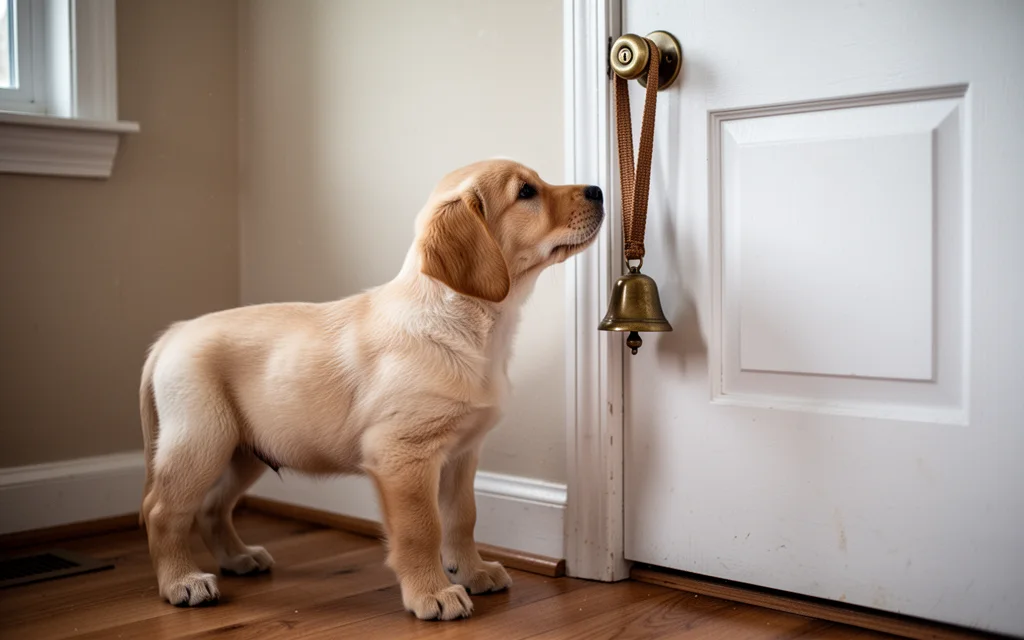
- Ensure the bell’s placement is accessible and unambiguous. Hang it on a door handle or hook where the puppy can easily reach it, following the product’s fitting instructions. A clear, consistent location reduces confusion.
- Pair the bell with routine by using it during scheduled toilet breaks. This helps the puppy understand the bell is part of a predictable process, not a random event. Over time, the bell becomes a familiar signal for the puppy’s needs.
Introduce the bell without forcing contact
The American Kennel Club’s bell-training guide starts by letting the dog investigate the bell and rewarding interest. Place it by the door used for toilet trips, then ring it when you take your puppy out. The guide links the sound with going outside through repetition and says to praise and take the dog outside when they ring independently. Do not force a paw or nose against it.
Keep responding to your puppy’s other toilet signals as well. The bell adds a way to communicate; it is not a reason to delay a needed trip while waiting for a ring. Continue rewarding toileting in the appropriate place, as described in Battersea’s toilet-training guidance. If the puppy goes out but does not toilet, record what happened without calling the ring a mistake. A ring tells you the bell was used; it cannot prove what the puppy intended.