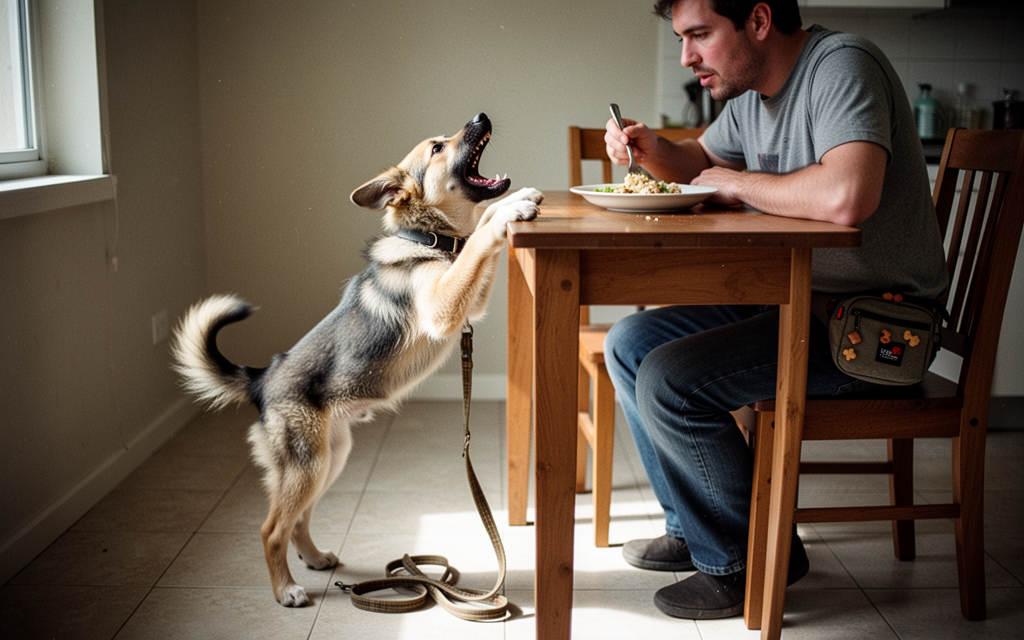
Dogs may bark during meals if they associate eating with attention or rewards, a behavior known as demand barking for food. This often happens when a dog expects interaction, such as receiving treats or praise, while eating. To address this, avoid reinforcing the barking by withholding attention or food when it occurs. Instead, quietly redirect the dog to a calm state, such as sitting or lying down, and reward calm behavior. If the barking is sudden, persistent, or accompanied by other unusual signs, consult a veterinarian to rule out underlying health concerns. The goal is to shift the dog’s focus from seeking attention to associating meals with quiet, relaxed behavior.
Understanding the Behavior: Why Dogs Bark for Food
Demand barking during meals often stems from a dog’s learned association between vocalizing and receiving rewards, such as food or attention. This behavior is not inherently aggressive or indicative of illness but rather a result of past reinforcement patterns. For example, if a dog has previously received a treat or a scrap of food after barking during a meal, they may repeat the behavior to recreate that outcome. Over time, this becomes a predictable way for the dog to communicate their needs, even if the method is disruptive.
- Seeking attention or resources: Dogs may bark to signal hunger, request a change in routine, or draw focus to themselves. This is especially common if the dog has been inadvertently rewarded for barking in the past, such as by receiving food or being allowed to join the table.
- Operant conditioning: As noted by Canine Joint Science, demand barking is classified as operant behavior—meaning it is reinforced by outcomes that follow the action. If barking leads to a desired result (e.g., a treat, a change in activity), the dog is more likely to repeat it.
- Contextual triggers: The behavior often occurs in specific situations, such as when food is present or when the dog is in a room with a person holding an object (like a phone or plate). This contrasts with barking caused by frustration at barriers or separation anxiety, which may occur in different settings and require distinct interventions.
It is crucial to distinguish demand barking from other issues, such as boredom or discomfort, which may present similar symptoms but require different solutions. For instance, a dog that barks only when left alone may be experiencing separation anxiety, while one that barks at barriers might be displaying frustration rather than seeking a reward. Addressing demand barking effectively involves identifying and removing the reinforcement cycle, rather than punishing the behavior itself.
Recognizing the Difference: Normal vs. Concerning Barking
Ordinary attention-seeking barking during meals typically occurs in short bursts and stops when the dog’s request is ignored or redirected. This behavior is often accompanied by body language such as pawing, spinning, or jumping, and it usually subsides once the dog realizes it won’t receive immediate rewards. However, signs that may indicate a need for veterinary evaluation include barking that is new to the dog’s behavior, occurs with unusual intensity or frequency, or persists despite consistent training efforts. For example, if barking escalates to the point of causing physical discomfort, disrupting sleep, or interfering with household routines, it may signal an underlying issue beyond simple demand behavior. Persistent barking that does not respond to standard training methods—such as removing rewards and reinforcing calmness—could also warrant a consultation with a veterinarian or canine behavior specialist. This distinction is critical because while occasional demand barking is common and manageable, extreme or sudden changes in vocalization patterns may reflect health concerns, anxiety, or environmental stressors that require professional guidance. Learn more about demand barking patterns and how to differentiate them from more urgent behavioral signals.
- New onset: Sudden barking during meals without prior history of similar behavior may indicate a shift in the dog’s emotional or physical state.
- Extreme frequency: Continuous, unrelenting barking that overwhelms the household or prevents the dog from eating calmly could signal distress or a medical issue.
- Persistent despite training: If the dog continues to bark aggressively for food even after consistent redirection and reward removal, it may require tailored intervention beyond basic training techniques.
- Disruption of daily life: Barking that interferes with family activities, causes fear in other pets, or leads to self-harm (e.g., excessive pacing, destructive behavior) should prompt a vet visit.
Removing the Reward: Practical Steps to Deter Barking
Consistency is key when redirecting a dog’s focus during meals. Begin by ensuring the dog is fully settled before offering food—this means sitting quietly without eye contact or vocalizations. If the dog barks, turn away and avoid any verbal or physical interaction, as even a glance can inadvertently reinforce the behavior. Instead, wait for a pause in the barking, then immediately offer food or praise if the dog is calm. This teaches the dog that silence, not noise, leads to rewards.
- Prepare meals in another room: Reduce the dog’s opportunity to associate the act of eating with attention-seeking behavior by feeding in a space where the dog cannot see or hear you until the meal is ready.
- Use a calm, neutral tone: When the dog is quiet, speak in a soft, monotone voice to avoid unintentionally encouraging excitement or anticipation. Avoid using commands like “quiet” or “hush,” as these can become part of the dog’s demand repertoire.
- Ignore escalation: If the dog persists in barking, leave the room entirely. Return only when the dog is completely still, reinforcing that attention is withheld until the behavior stops.
- Reinforce calmness with food: Place food in a bowl and wait for the dog to approach without barking. Once the dog eats without interruption, offer a small treat or verbal praise to mark the desired behavior.
These steps align with principles outlined by Dogly, which emphasizes preempting barking by eliminating opportunities for it and reinforcing alternatives. Success depends on patience and ensuring that all household members follow the same approach, as inconsistent responses can confuse the dog and prolong the behavior.
Reinforcing Calm Behavior: Positive Training Techniques
Redirecting a dog’s focus from food to a calm behavior requires consistent, low-effort reinforcement. Begin by identifying a quiet action the dog can perform near the meal area, such as sitting or lying down. When the dog exhibits this behavior, offer a high-value treat or verbal praise immediately. This creates a direct link between calmness and reward, helping the dog associate stillness with positive outcomes. Avoid verbal corrections, as even a “shush” can inadvertently reinforce the barking by providing attention. Instead, use a neutral tone and focus on rewarding the desired behavior.
- Use food as a bridge: If the dog barks during meals, pause feeding and wait for calmness. Once the dog stops barking and looks away, give a treat. Over time, this teaches the dog that silence, not noise, earns rewards. A detailed example of this approach is described in this guide, which explains how to use rapid-fire treats to reinforce quietness before transitioning to non-food rewards.
- Introduce alternative reinforcers: Gradually replace food treats with toys or activities the dog enjoys. For instance, if the dog stops barking and sits, offer a favorite toy as a reward. This shifts the focus from food to the behavior itself, reducing mealtime tension.
- Reset when needed: If the dog slips and barks, remove the food or toy temporarily. This breaks the cycle of barking for rewards and gives the dog a fresh opportunity to choose calmness. Reintroduce the item only after the dog has settled, reinforcing the connection between quietness and access.
Consistency is key: apply these techniques during every meal, even if progress feels slow. Over time, the dog will learn that calmness—not barking—leads to rewards. This method avoids punishment and instead builds a clear, positive association between behavior and outcome.
When to Seek Professional Help: Signs You Should Consult a Vet or Trainer
If your dog’s barking during meals is accompanied by unusual physical signs, sudden changes in behavior, or persistent distress, it may indicate an underlying issue beyond typical demand barking. For example, if the dog shows signs of discomfort (e.g., whining, restlessness, or avoidance of certain foods), or if the barking escalates to aggression or panic, a veterinary evaluation is necessary to rule out medical causes such as pain, gastrointestinal distress, or anxiety disorders. Similarly, if the barking is paired with other concerning behaviors—such as excessive drooling, vomiting, or refusal to eat—consulting a vet becomes critical.
- Behavioral changes: A sudden shift in the dog’s usual patterns, such as increased clinginess, destructive behavior, or withdrawal from social interactions, may signal emotional or psychological stress that requires professional intervention.
- Physical discomfort: Persistent barking that seems linked to pain (e.g., whining, limping, or reluctance to move) should be assessed by a veterinarian to identify potential health issues.
- Escalation beyond training: If consistent application of extinction methods (withholding rewards) fails to reduce the behavior, or if the dog exhibits signs of frustration (e.g., growling, lunging), a certified dog trainer can help refine the approach or address deeper motivational factors.
- Complex environmental triggers: If the barking appears tied to specific stressors (e.g., loud noises, unfamiliar people, or changes in routine) that are difficult to manage independently, a trainer specializing in behavior modification may provide tailored strategies.
To find a qualified professional, seek trainers affiliated with recognized organizations such as the Association of Pet Dog Trainers (APDT) or the International Association of Animal Behavior Consultants (IAABC), which emphasize science-based, humane methods.
Disclosure: As an Amazon Associate I earn from qualifying purchases. Links in the related-products section are paid links.