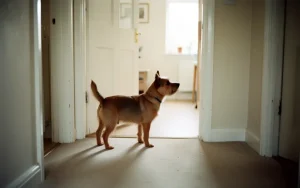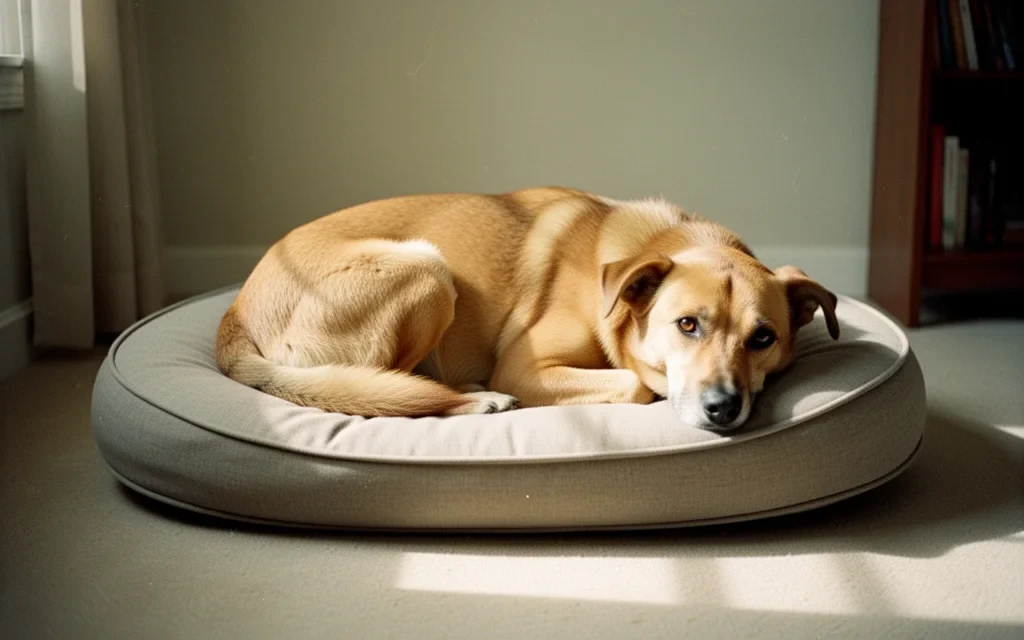
If your new rescue dog is hiding, give them a safe place to retreat and stop trying to pull or coax them into contact. Check that their basic needs can be met, watch for health concerns and contact the rescue for support. Hiding is something to understand, not a behaviour to punish.
Check whether the hiding place is safe
Can the dog get in and out without becoming stuck? Are there cables, sharp edges or other hazards nearby? Can they reach water and take necessary toilet trips without being surrounded by people?
If the spot is unsafe, ask the rescue how to arrange a safer retreat without forcing a frightening confrontation. Do not repeatedly block every place the dog chooses until they have no way to move away from attention.
Reduce pressure around them
Keep the area quiet and ask people to leave the dog alone. Avoid leaning into the space, staring, reaching under furniture or bringing visitors over to see them. Let the dog observe without having to greet anyone.
The National Animal Welfare Trust recommends a quiet retreat and allowing a rescue dog to explore at their own pace. A safe resting place should remain available even when you would like the dog to spend more time with you.
Notice needs, not just time spent hidden
Keep track of eating, drinking, toileting, movement and rest. If any of these raise a concern, or the dog appears unwell or in pain, speak to your vet. Do not wait for a settling-in deadline to pass before seeking help.
Ask the rescue what they have seen before and how they suggest meeting daily needs while the dog is worried. If handling or moving the dog cannot be done safely, get a plan from someone qualified rather than improvising restraint.
If the dog chooses to come out, keep the room calm and give them space. Ask the rescue for advice before trying to change a difficult handling situation.
Keep your observations small and clear
You might note “came out for water when the room was quiet” or “moved back when someone stood in the doorway”. These descriptions help the support team understand the setup without guessing at the dog’s past.
Notice comfortable moments too, but do not turn one approach into a bigger greeting. A dog choosing to stand near you may simply want to investigate. Give them room to move away again.
There is no fixed day when every rescue dog should stop hiding. Keep the home predictable, protect their quiet space and use the rescue’s support. The next useful step may be a small change to the room or routine, rather than asking the dog to be braver.
Further reading
Dogs Trust: How to help a rescue dog get settled into your home | Dogs Trust; National Animal Welfare Trust: Settling in Your New Rescue Dog: A Guide to Helping Your Dog Feel Safe at Home | National Animal Welfare Trust; Dogs Trust: How to Understand Your Dog’s Body Language | Dogs Trust.
Related advice: dog care and handling.