Teaching a dog to “leave it” involves building a trained impulse-control cue through short, positive sessions rather than relying on instinct. Start with a covered treat or toy, using a calm voice to redirect attention, then gradually introduce real-world distractions. Reward disengagement with high-value treats or play, ensuring the dog associates “leave it” with a choice, not force. Safety matters: avoid prying or shouting, and use “fair trade” by offering something better in exchange for the item. This skill requires consistent practice, adapting to the dog’s pace and environment, and verifying progress through controlled scenarios. The goal is cognitive stillness, not physical restraint, fostering trust and focus over time.
Understanding ‘Leave It’ as a Trained Skill, Not an Instinct
‘Leave it’ is not an instinctive ability dogs are born with; it is a learned behavior that must be taught through consistent, positive reinforcement. This command is essential for building impulse control, which helps dogs make thoughtful decisions in situations that might otherwise trigger reactive or undesirable behavior. Unlike innate reflexes, ‘leave it’ requires training to teach a dog to pause, look to the handler, and choose to disengage from an object or situation.
Training a dog to ‘leave it’ involves teaching them that ignoring an item or stimulus can lead to a reward, rather than taking it. This process starts with simple, controlled exercises, such as placing a treat in a closed fist and rewarding the dog for looking away. As the dog becomes more proficient, the training progresses to more complex scenarios, such as leaving items on the ground or avoiding distractions in public. This gradual approach helps the dog associate the command with positive outcomes, reinforcing the behavior over time.
According to Channeled Canine Coaching, ‘leave it’ is more than just a trick—it is a lifeline that builds trust and real-world decision-making. It teaches dogs that they can pause and look to their handler instead of acting on impulse. This skill is particularly valuable for dogs bred to be mouth-oriented, such as retrievers, who may naturally be inclined to grab or carry items. Training helps redirect this instinct into a controlled, safe behavior that benefits both the dog and their human companions.
The Importance of Cognitive Stillness in Training
Unlike commands such as “Sit” or “Down,” which primarily focus on physical positioning, the “Leave it” cue requires a different kind of engagement from your dog — one that emphasizes mental discipline and impulse control. This distinction is crucial because it shifts the focus from simply making your dog stay still to teaching them to make a conscious decision to disengage from something they are drawn to. According to Channeled Canine Coaching, “Leave it” is not just about preventing your dog from grabbing socks or snacks; it’s about helping them build the ability to pause, look to you, and choose a more appropriate action. This cognitive stillness is a foundational skill that can be applied in many real-world scenarios, from avoiding dangerous objects to respecting personal space.
Training for cognitive stillness involves more than just repetition; it requires your dog to understand that choosing to disengage is a positive action. This is where the concept of “fair trade” comes into play, as explained on Dogs Trust. By offering something of greater value in exchange for what your dog has in their mouth, you reinforce the idea that giving up an item can be a rewarding experience. This approach helps your dog associate the “Leave it” cue with positive outcomes, making it more likely that they will respond to it in high-distraction environments.
It is also important to recognize that cognitive stillness is not about forcing your dog into submission. Instead, it is about creating a training environment where your dog feels safe and motivated to make the right choice. As noted on Purina, providing your dog with ample mental and physical stimulation through enrichment activities can reduce the likelihood of them engaging with inappropriate items in the first place. This proactive approach supports the development of cognitive stillness by ensuring your dog has the tools they need to make better decisions when faced with temptation.
Starting with a Covered Treat: The Foundation of the Cue
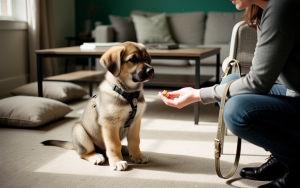
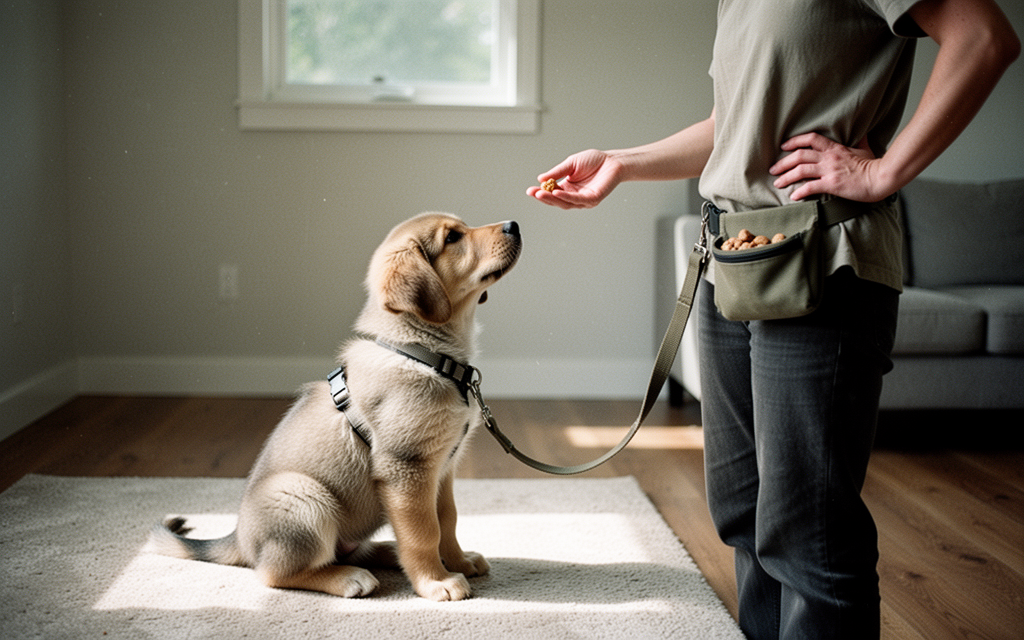
Begin by placing a high-value treat in your closed fist, ensuring your dog can see it but cannot access it. This creates a controlled scenario where the dog must pause and look away from the treat to earn a reward. Use a calm, consistent tone to say “leave it” as you hold your hand near their nose. If they turn their head or look away, immediately mark the behaviour with a clicker or a verbal cue like “yes,” then reward them with a treat from your other hand. This reinforces the idea that ignoring the treat—rather than engaging with it—leads to a positive outcome. Repeat this until your dog consistently disengages from the closed fist without attempting to bite or paw at it.
- Control the environment: Conduct these sessions in a quiet space with minimal distractions, such as a spare room or a mat on the floor. This helps your dog focus on the task without competing stimuli.
- Use a boring item as a contrast: Pair the treat in your hand with an uninteresting object (e.g., a piece of paper or a dry kibble) in your other hand. This teaches your dog that the treat in your fist is the goal, while the other item holds no value. Dogs Trust suggests this method to build clarity in the dog’s mind about what to avoid.
- Gradually increase difficulty: Once your dog reliably ignores the closed fist, begin hiding the treat in a closed container or placing it on the floor and covering it with your hand. This mimics real-world scenarios where the dog must resist the urge to grab something they see but cannot access immediately.
The goal is to associate the “leave it” cue with a pause in impulse, not a punishment. Positive reinforcement ensures the dog views the command as an invitation to make a choice, rather than a restriction. This foundational step sets the stage for applying the cue in more complex situations, such as avoiding food on the ground or ignoring distractions during walks. Consistency in timing, tone, and reward delivery is critical to avoid confusion. If your dog shows frustration or disinterest, simplify the task by reducing the treat’s visibility or using a more enticing reward.
Progressing to Real-World Scenarios
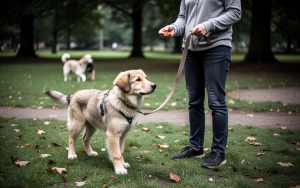
Once your puppy reliably responds to “leave it” in controlled settings, gradually introduce the cue in environments with increasing distractions. Begin in quiet, familiar spaces and progress to busier areas like parks or streets. Use high-value treats or toys to maintain engagement, and ensure the puppy associates the command with positive outcomes rather than frustration. For example, if your puppy notices a squirrel during a walk, calmly say “leave it” and redirect their focus to a treat in your hand. Consistency is key: practice in short, frequent sessions to reinforce learning without overwhelming the puppy.
- Generalize the behavior: Practice in varied locations (e.g., home, yard, public spaces) to help the puppy recognize the cue across contexts. According to Pet Norms, consistency in different environments ensures the puppy generalizes the behavior effectively.
- Use positive reinforcement: Reward the puppy immediately when they obey the cue, even if they initially hesitate. This reinforces the connection between the command and the desired action, as noted by Channeled Canine Coaching.
- Avoid forceful corrections: Refrain from pulling the puppy away from an object or using harsh tones. Purina emphasizes that puppies learn best through patience, and reactive methods may erode trust.
- Introduce social scenarios: Practice with other dogs or people in safe settings. If the puppy becomes overly excited, use the “leave it” cue to pause interactions and redirect focus to you.
Progress should be measured by the puppy’s ability to pause and look to you rather than react impulsively. If challenges arise, revisit simpler steps before advancing. The goal is to build a reliable, stress-free response that translates to everyday life.
Avoiding Forceful Methods and Building Trust
Forceful techniques such as shouting, prying, or physically removing items from a dog’s mouth can undermine trust and create confusion. These methods may temporarily stop unwanted behaviour but risk associating the training with fear or frustration, which can hinder long-term learning. Instead, focus on reinforcing positive choices through patience and consistent reward-based guidance.
When a dog learns “leave it,” they should associate the cue with a voluntary decision to disengage from an object, not a reaction to pressure. For example, let your puppy explore a toy, then offer a high-value treat in exchange. If they release the toy, mark the behaviour with a clicker or verbal praise and reward them immediately. This teaches them that yielding to the cue leads to positive outcomes.
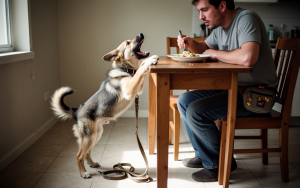
Avoid scenarios where the dog retains an item after interacting with it, as this reinforces the behaviour you’re trying to prevent. According to Purina, if an object is inherently rewarding (e.g., smelly, chewable), the dog may repeat the action unless redirected with a clear alternative. By prioritising trust-building over coercion, you create a foundation for reliable impulse control that extends beyond training sessions.
Purina’s guide explains how to avoid reinforcing unwanted behaviours during training.
Disclosure: As an Amazon Associate I earn from qualifying purchases. Links in the related-products section are paid links.