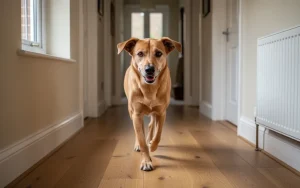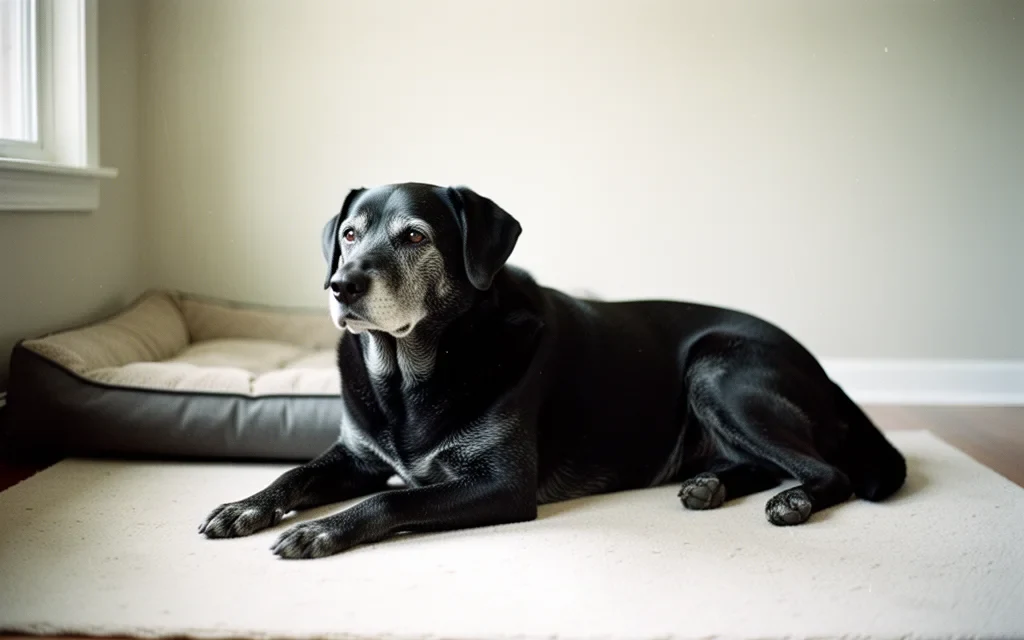
Enrichment for an older dog should fit what they can comfortably do now. Keep favourite activities easy to reach and adjust the setup rather than expecting the dog to work around it. A simple food search or familiar toy can still be worthwhile without fast movement or a difficult puzzle.
If your dog has new changes in movement, appetite, sleep or behaviour, speak to your vet. Do not assume those changes are simply part of getting older or something a new game will fix.
Look at the setup from your dog’s level
Can they reach the activity without climbing, stretching awkwardly or crossing a slippery surface? Is there enough room to turn and move away? These practical questions help you spot changes you can make before play starts.
Follow your vet’s advice about exercise and any health restrictions. Choose food that fits the dog’s diet and count it within the normal allowance. Avoid copying an activity designed for a younger dog without checking whether its movements suit yours.
Keep the familiar parts
Dogs Trust recommends making time for brain games and interaction with older dogs, while keeping training from being too physically demanding. You can keep the activity recognisable and make access easier.
For example, a dog who enjoys finding food could start with visible pieces in a small clear area. A dog who likes a food puzzle could use the easiest setting. A dog who enjoys your company might prefer a quiet familiar interaction to a new toy.
These are choices to consider, not a programme every older dog needs. Let your dog move away and rest. Interest in a brief easy game does not mean you should keep extending it.
Notice what has changed
A small diary can help you describe patterns to your vet. Record the activity, the surface, what your dog did and whether anything was unusual. Write observations such as “walked away when the toy rolled across the room”, rather than deciding that the dog was lazy.
If you notice a change, do not repeatedly recreate a difficult situation to check it. Make the immediate setup comfortable and seek advice. Pain and other health concerns need assessment, not a tougher training exercise.
Let a successful game stay easy
It is fine to repeat an activity at the same level. You do not need a longer search or a more complicated puzzle to make the session count. Your dog’s comfort and interest are more useful guides than a timer.
At the end, offer an undisturbed chance to rest and put away any equipment that needs supervision. Keep your notes simple enough that another family member can offer the same comfortable setup. That makes it easier to share care without everyone trying a different challenge.
Further reading
Dogs Trust: Rehoming and looking after an older dog | Dog Care | Dogs Trust; Dogs Trust: Enrichment activities to keep your dog entertained | Dogs Trust; ASPCA: Canine DIY Enrichment | ASPCA.
Related advice: an easy find-it game.