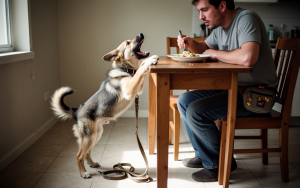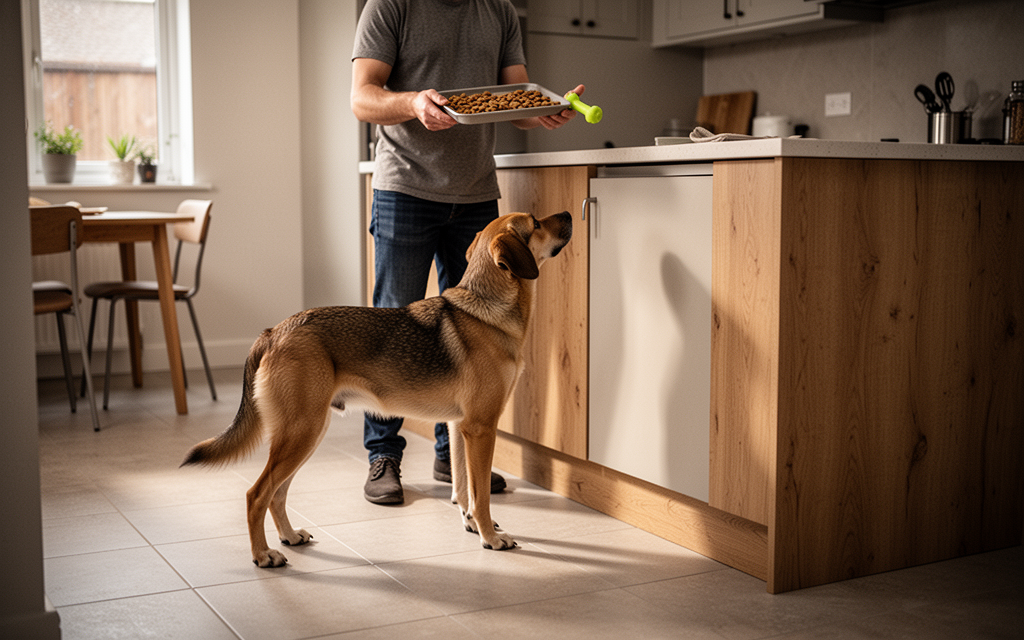
Stopping a dog from counter surfing requires proactive management and positive reinforcement. Clear counters of accessible food, use elevated feeding stations, and redirect attention to acceptable behaviors like fetching or sitting. Avoid chasing or scolding, as these methods reinforce the habit. Instead, reward calm, alternative actions with treats or praise. If a dog suddenly exhibits obsessive food-seeking, consult a vet to rule out medical causes. Success depends on consistent environmental control and identifying what motivates the dog’s behavior. Each household must assess its layout, food storage, and the dog’s individual needs to create a tailored solution.
Understanding the Behavior and Its Triggers
Dogs are naturally inclined to seek out food sources, a trait rooted in their evolutionary history as scavengers. This instinct, combined with their strong sense of smell, makes them highly motivated to investigate any area where food might be available — including kitchen counters and dining tables. Counter surfing is not a random act but a learned behavior, often reinforced by the immediate reward of finding food. Even a small discovery, like a crumb or a fallen snack, can encourage a dog to repeat the behavior, making it a self-reinforcing cycle.
According to DevotedToDog.com, the behavior is self-reinforcing: every food find, even a stray crumb, rewards the habit and makes the next attempt more likely. This means that dogs do not simply jump on counters out of mischief — they do so because the behavior works for them. Understanding this mechanism is the first step toward knowing how to stop counter surfing dogs for good.
Additionally, dogs may be more likely to counter surf when they are left unattended, as they may perceive these moments as opportunities to access food without immediate consequences. As noted on PreventiveVet.com, most of the time, dogs are counter surfing when their human isn’t around, which makes this behavior difficult to correct in the moment. There’s no point in punishing your dog after the fact; if a consequence doesn’t happen right as your dog starts to misbehave, your dog isn’t going to make the connection we want them to make.
While counter surfing may seem mischievous, it is a learned behavior that can be managed and prevented with the right training and setup. As explained on Animal Welfare Society, dogs are highly motivated by smell and reward. If they successfully find food on a counter even once, they are likely to repeat this behavior. Over time, this becomes a learned habit rather than a one-time mistake.
Preventive Measures to Reduce Access
Environmental management is the foundation of preventing counter surfing, as it removes the immediate temptation that reinforces the behaviour. Start by thoroughly cleaning countertops after cooking or eating, as even small crumbs or food scents can entice dogs to investigate. This step is critical because dogs are highly motivated by smell, and residual traces can act as a beacon for future attempts. Secure all food storage areas with airtight containers or cabinets that dogs cannot access, and avoid leaving snacks or loose items on counters.
- Wipe surfaces regularly: Use disinfectant wipes or a damp cloth to eliminate food particles, oils, or spills that might linger on countertops. According to PreventiveVet, this reduces the likelihood of dogs associating counters with rewards.
- Create a designated safe zone: Provide a comfortable, elevated spot near the kitchen where your dog can wait during meal preparation. This redirects attention away from counters and offers a predictable alternative.
- Use barriers or deterrents: Install baby gates to restrict access to high-traffic areas, or apply pet-safe deterrent sprays to surfaces. These tools prevent dogs from reaching counters without relying on punishment.
- Proof the environment: Consistently enforce rules by supervising your dog during meals and redirecting them to appropriate activities, such as puzzle toys or training sessions, when they show interest in counters.
By systematically eliminating access points and offering structured alternatives, dogs learn that counters are not a source of reward. This approach avoids reinforcing the habit through scolding and instead focuses on making the undesired behaviour impossible to repeat.
Creating a Designated Safe Zone
Establishing a predictable, distraction-free space for your dog to focus on when counter surfing occurs helps redirect their attention away from the counter. This area should be located near the kitchen or dining area but separated by a physical barrier (e.g., a baby gate) to prevent access to the counter itself. The safe zone should include a comfortable mat, a few toys, and a consistent routine—such as placing a treat or puzzle toy there during meal times or when you’re cooking. The goal is to make this space more appealing than the counter by associating it with positive experiences, like calmness or rewards.
- Choose a location with minimal distractions, ideally near the counter but out of reach. This helps the dog learn that the safe zone is the correct place to be when they feel the urge to investigate.
- Use positive reinforcement by offering high-value treats or affection whenever the dog stays in the safe zone. Avoid using the space for corrections or negative interactions, as this could create stress.
- Train an alternative behavior such as “stay” or “go to your mat” to teach the dog what to do instead of counter surfing. Pair this with the safe zone to reinforce the connection between the command and the location.
- Gradually increase the time the dog spends in the safe zone, especially during moments when counter surfing is likely (e.g., meal prep). Consistency helps the dog understand that this space is a reliable, rewarding alternative.
Managing the environment to remove temptations—such as storing food in closed cabinets—supports this approach. For detailed guidance on combining environmental management with training, see DevotedToDog.com. The key is to make the safe zone a positive, go-to location rather than a place of restriction, ensuring the dog associates it with comfort and success over time.
Reward-Based Training for Alternative Behaviors
Training a dog to replace counter surfing with a more appropriate behavior requires consistent, positive reinforcement. The goal is to teach your dog that engaging in alternative actions—such as sitting, lying down, or going to a designated spot—yields greater rewards than searching for food on the counter. This approach works best when combined with management strategies, such as keeping counters clear and providing a safe, engaging station for your dog to wait or rest.
- Identify a desired behavior: Choose an action your dog can easily learn, such as sitting or going to their bed. This behavior should be incompatible with counter surfing, meaning your dog cannot do both at the same time.
- Use high-value rewards: Offer treats, toys, or praise immediately after your dog performs the desired behavior. This reinforces the connection between the action and the reward, making it more likely your dog will repeat the behavior in the future.
- Practice in low-distraction environments: Begin training in a quiet space where your dog is less likely to be distracted by food or other stimuli. Gradually introduce more distractions as your dog becomes more reliable in performing the behavior.
- Redirect during counter surfing: If your dog attempts to counter surf, gently redirect them to the alternative behavior. Use a calm, firm tone to guide them, and reward them immediately if they comply.
- Avoid punishment: Scolding or physically correcting your dog can create fear or confusion, making the behavior harder to change. Instead, focus on reinforcing the correct action and managing the environment to reduce opportunities for counter surfing.
For additional guidance on selecting appropriate rewards and training techniques, you can explore How to stop your dog from counter surfing, which provides examples of mental enrichment and training methods that support this approach.
When to Consider a Veterinary Evaluation
While counter surfing is often a behavioral issue that can be managed through training and environmental adjustments, there are situations where a sudden or excessive change in this behavior may signal an underlying health concern.
Disclosure: As an Amazon Associate I earn from qualifying purchases. Links in the related-products section are paid links.